Which Came First, The Clinical Trials For mRNA Or The Pandemic?
The Potomac Questions: Fertility, Fauci, and the Vaccine Timeline
By George Webb — October 20, 2026
I’m returning to the Potomac gathering of March 2020 to put our questions, our research, and our recollections back into the public record. The dates matter. The people matter. And the questions the grandmothers asked about their children and grandchildren still deserve a public hearing.
The question we brought to the Potomac
Good morning, everyone. George Webb. I want to go back to March 2020, because people remember that we had a dozen researchers in a beach house on the Potomac, but they don’t always remember the detail of the work. We were comparing documents, talking to sources, following laboratories, and trying to understand the programs that existed before the emergency.
Several people around that table were grandmothers. Carol and the others were looking beyond the next press conference. They were thinking about children and grandchildren. What would these decisions mean for the next generation? What research had already been done? What would the public be asked to accept before the answers were available?
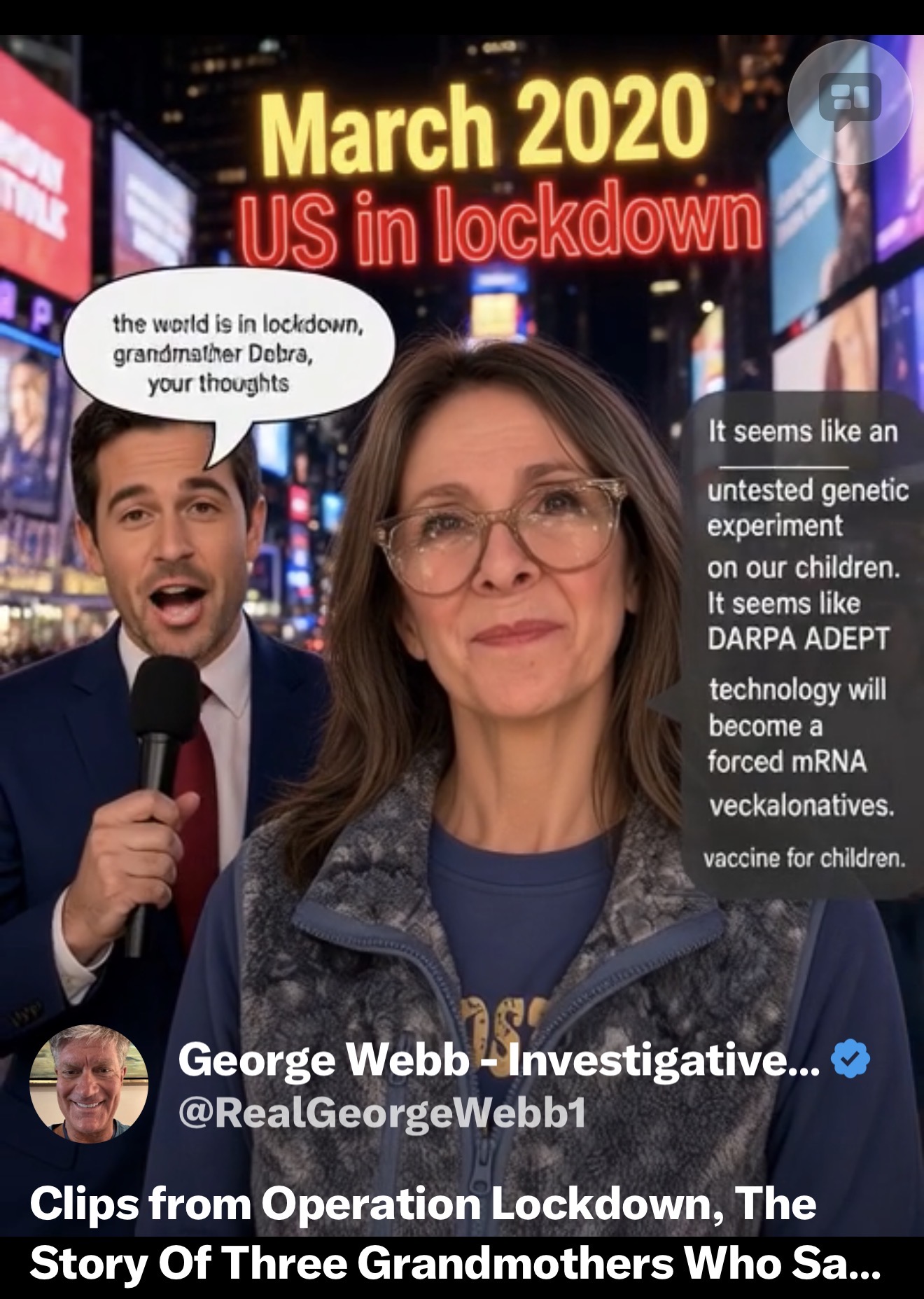
That is the beginning of this story. My investigation did not begin with a slogan about lockdowns. It grew out of earlier reporting on NIH, HIV research, military medicine, and the institutions that kept appearing in our work. When the emergency arrived, we brought those earlier questions to the table.
The fertility question was one of our working hypotheses. I want readers to understand how we arrived at it, which records we were following, and why the chronology became so important to us.
I have developed the surrounding reporting in George Webb “Corona Road Show”; Four Grandmothers Tougher on Fauci than Congress; The Making of Operation Lockdown; Why I Wrote The Operation Lockdown Song; Meet The Paul Revere Of The CoronaVirus Live Exercise.
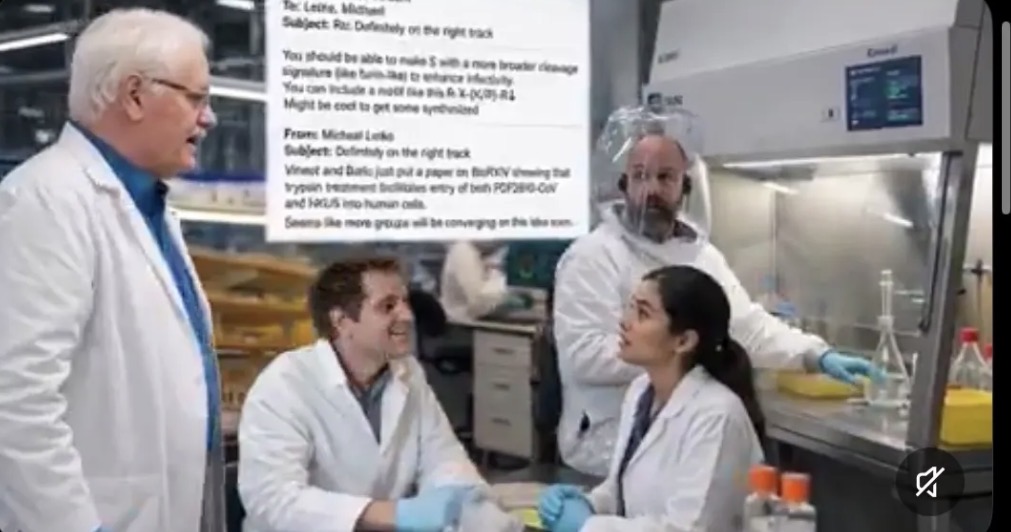
Ralph Baric , Vincent Munsterand his assistant Letko, all focus on increasing aerosolized infectivity of CoronaVirus.
What I mean when I say metadata
When I say metadata, I’m talking about the facts around a decision: the date on a document, the institution on a grant, the name on a protocol, the people assigned to a program, and the sequence in which the pieces appear.
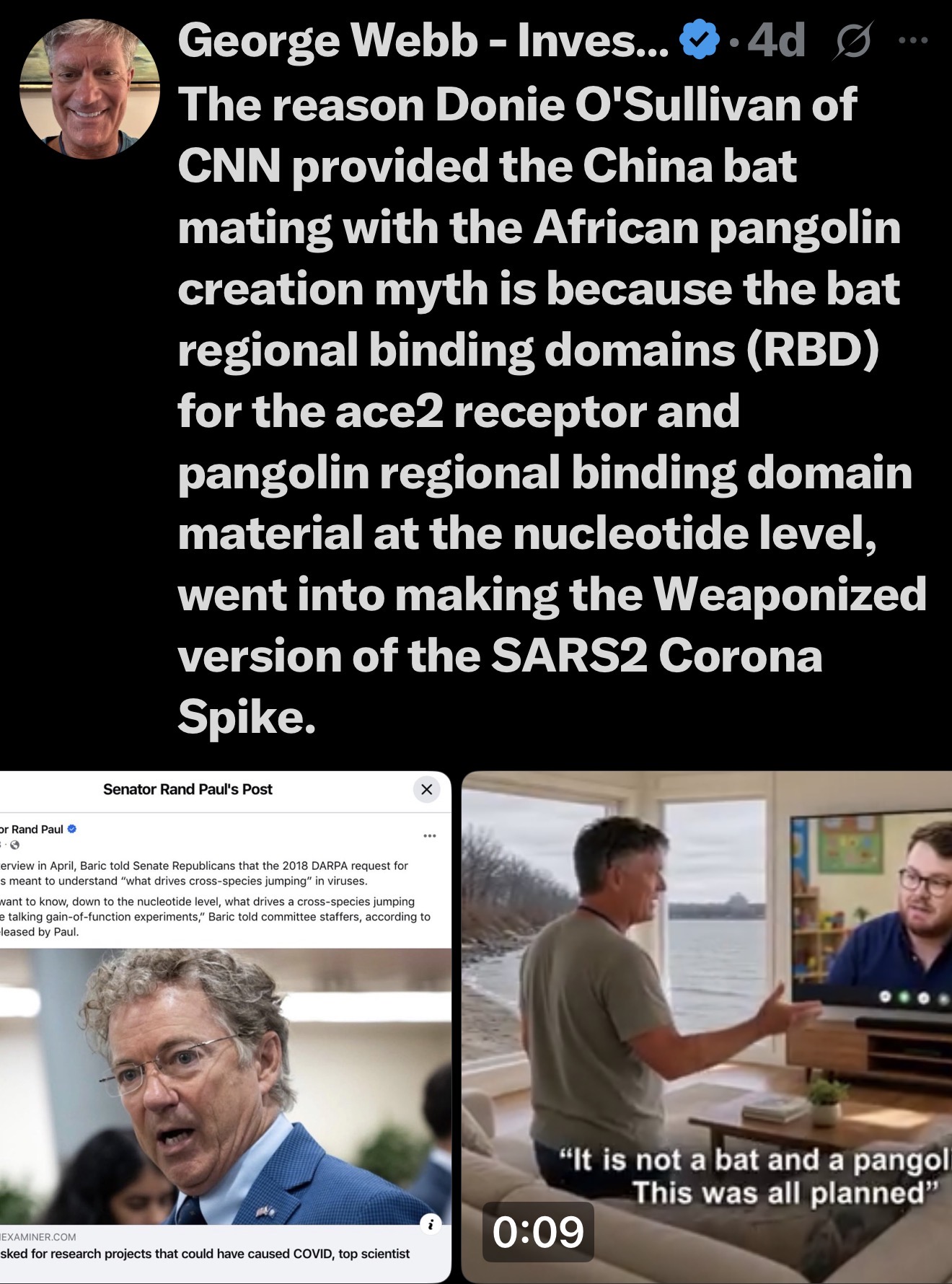
Put those details alongside one another. Who was involved before January 2020? Which vaccine platforms were already under development? Who had the manufacturing capacity? Which clinical networks could recruit participants? When did planning become authorization, and when did authorization become actual dosing?
Those are the questions I was asking. A press conference gives you the public explanation at a particular moment. The underlying paperwork can show how much preparation preceded that explanation and which choices were already being considered.
My approach is to build a chronology that a reader can follow. I want the document date beside the public statement, the protocol beside the announcement, and the investigator beside the institution. That is how I turn an impression into a reporting assignment. The metadata tell me where to look next.
I have developed the surrounding reporting in We Still Have Great Leads in the Fauci Investigation; Start Here: Roadmap To Deep State Takedown; OPERATION LOCKSTEP PART TWO — THE WHITE PAPER; Book Introduction – BioAgent Odyssey, Fauci Coverup Docs Confirm All; Full Book – BioAgent Odyssey.
Why I was already following the HIV history
I had been following Fauci and NIH before the coronavirus emergency. My research partner and I were pursuing leads around Bethesda and military medical institutions in the years leading into 2020. That history shaped the questions I brought to the Potomac.
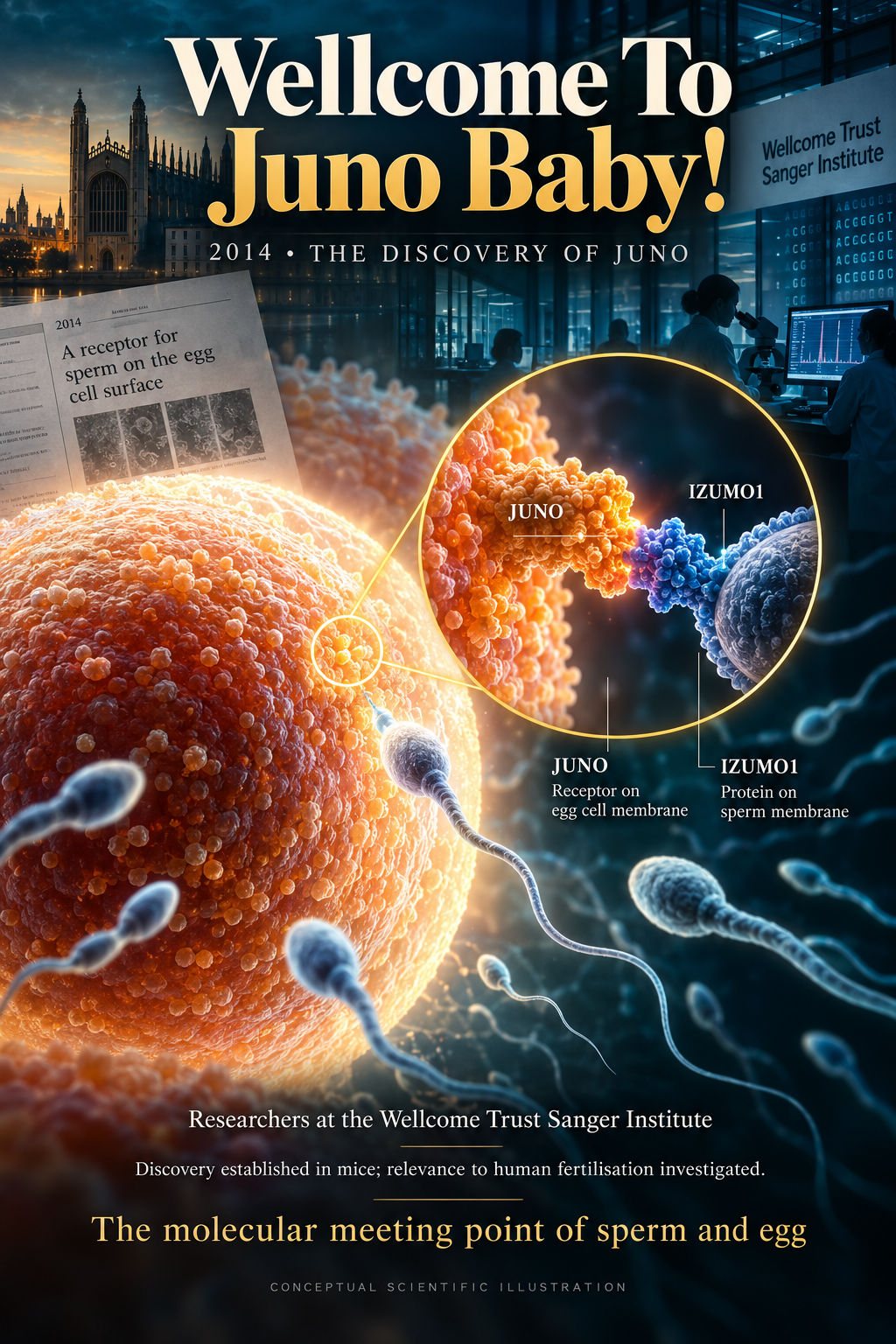
So when I saw familiar institutions and researchers appearing in the new vaccine effort, I wanted to follow the continuity. What had those teams studied before? Which laboratories, funders, and clinical networks were involved? What knowledge, staffing, and infrastructure moved from one program into another? Specifically, the Wellcome Trust had targeted the JUNO receptor on the female human egg cell as a potential birth contraception target.
HIV research provides a long documentary history: vaccine candidates, viral entry, antibody responses, clinical trials, and research involving pregnancy and reproduction. I want the actual studies on the table, with their dates and endpoints. If Wellcome Trust could artificially trigger a false pregnancy, the uterus would be flushed of the blood bedding needed for giving nutrients to the fertilized egg.
My concern about fertility came into that investigation as a question about possible mechanisms and possible objectives. The route through the evidence runs through named projects and particular experiments. That is why I have kept a research appendix with this article. Readers should be able to open the papers and follow the trail themselves.
I have developed the surrounding reporting in New George Webb Book – Fauci And Me; Fauci And Me – A Technical Preface; Hone Malone – Getting The HIV Band Back Together Again; Fauci And Me – Chapter Three – Murder On The GP120 Express; Fauci And Me – Introduction.
JUNO and IZUMO1: the recognition question
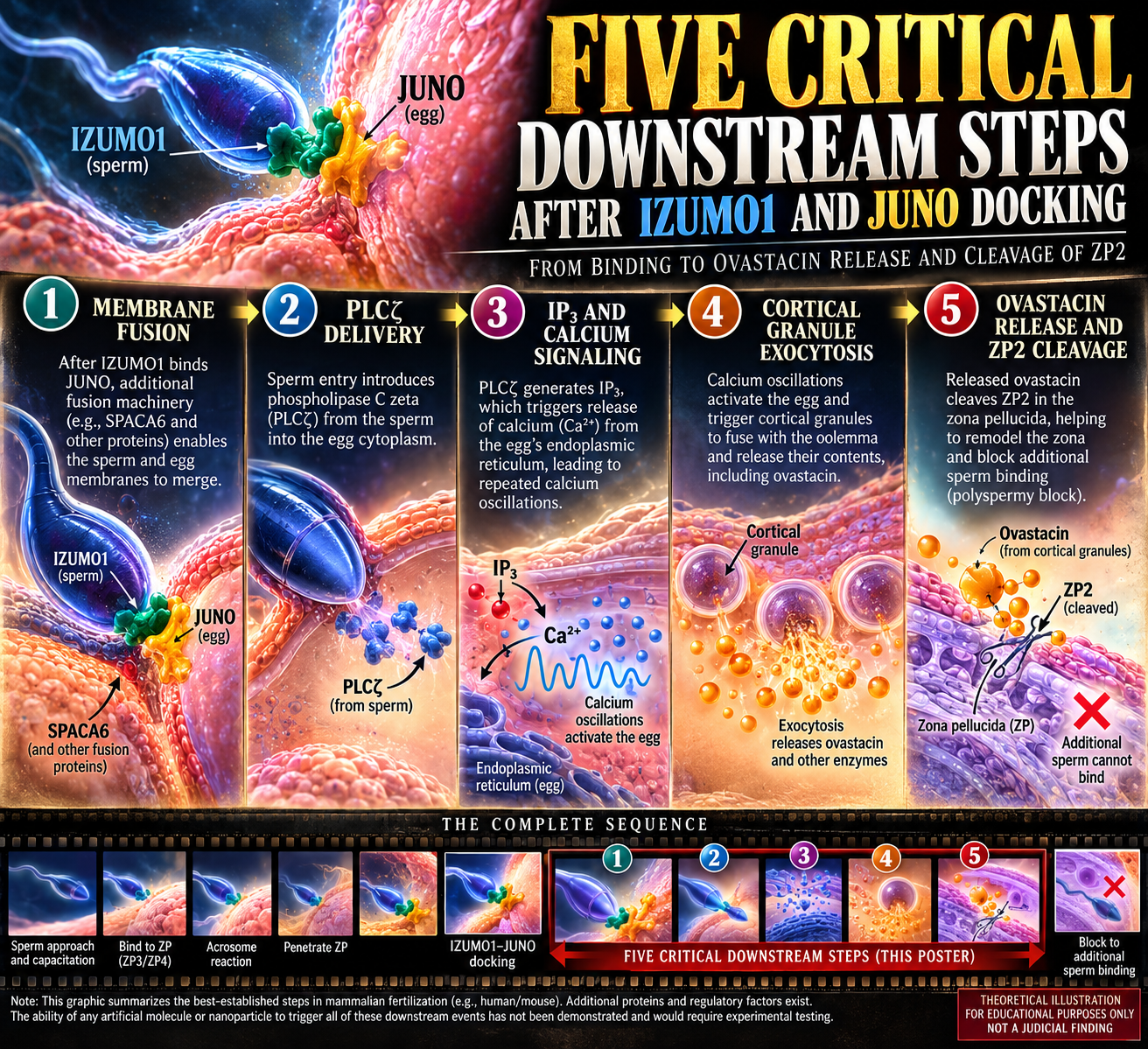
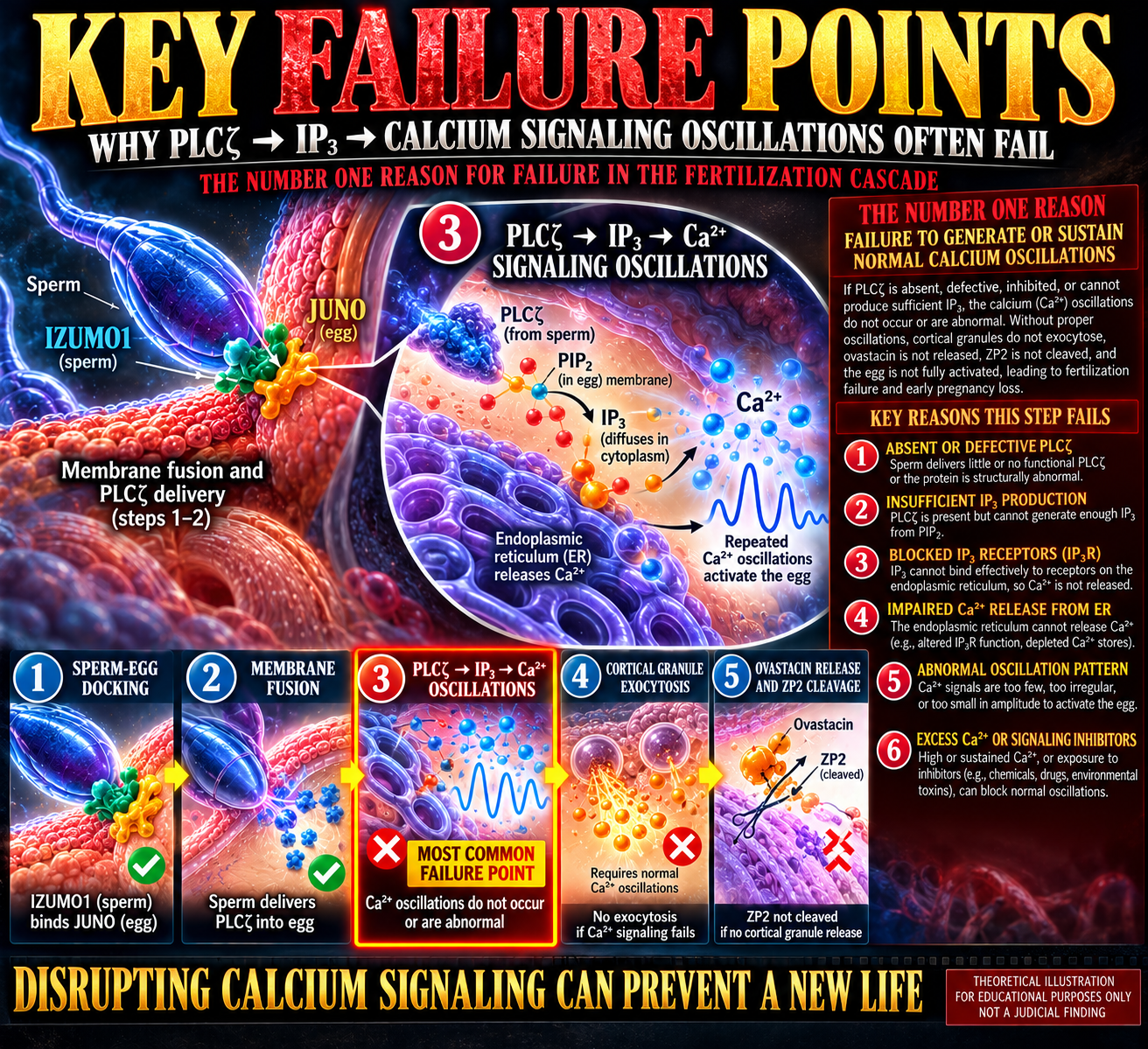
Let’s get specific about the biology. The two names are IZUMO1 and JUNO. IZUMO1 is a sperm protein; JUNO is its receptor on the egg. Their interaction is an essential part of the fertilization process.
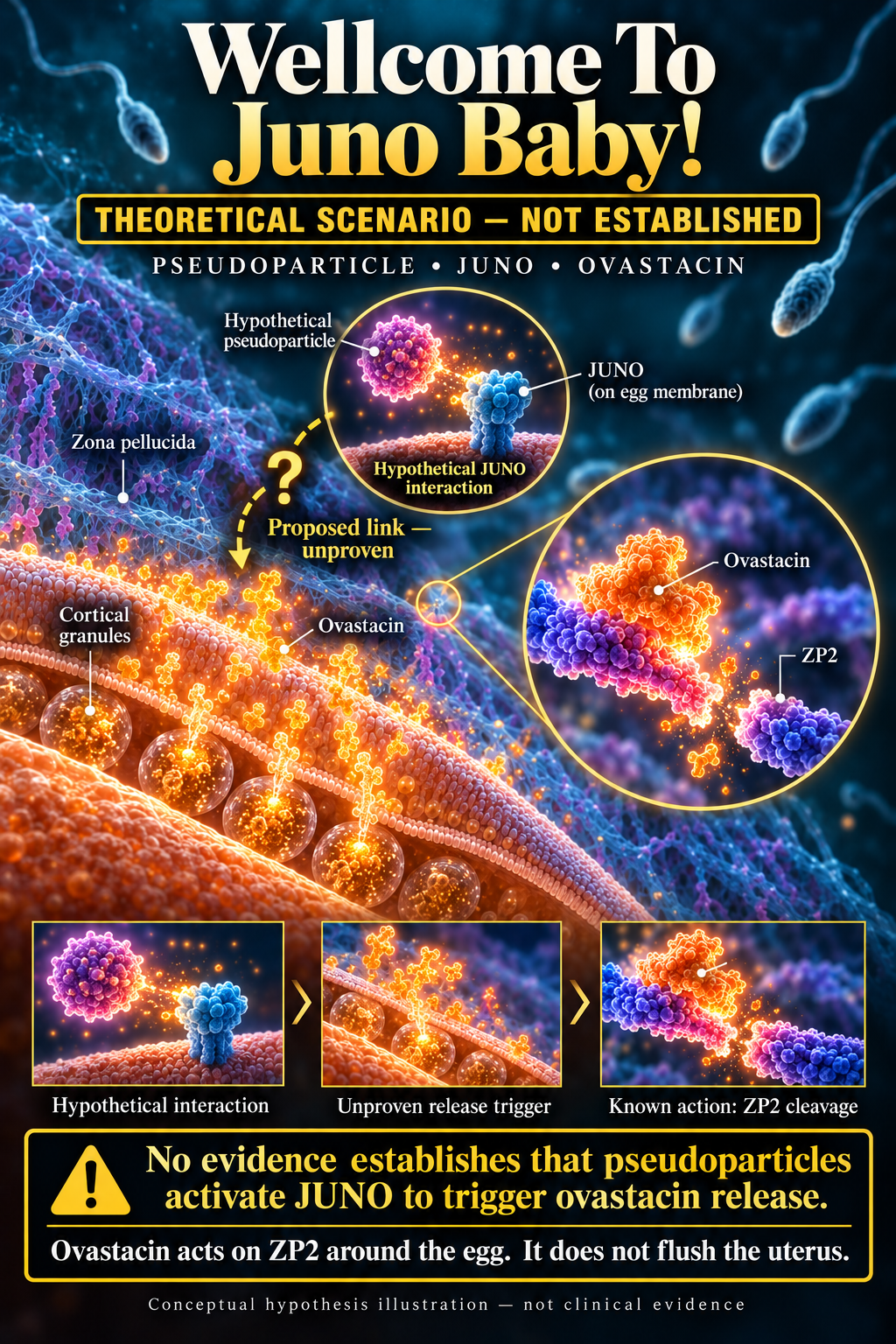
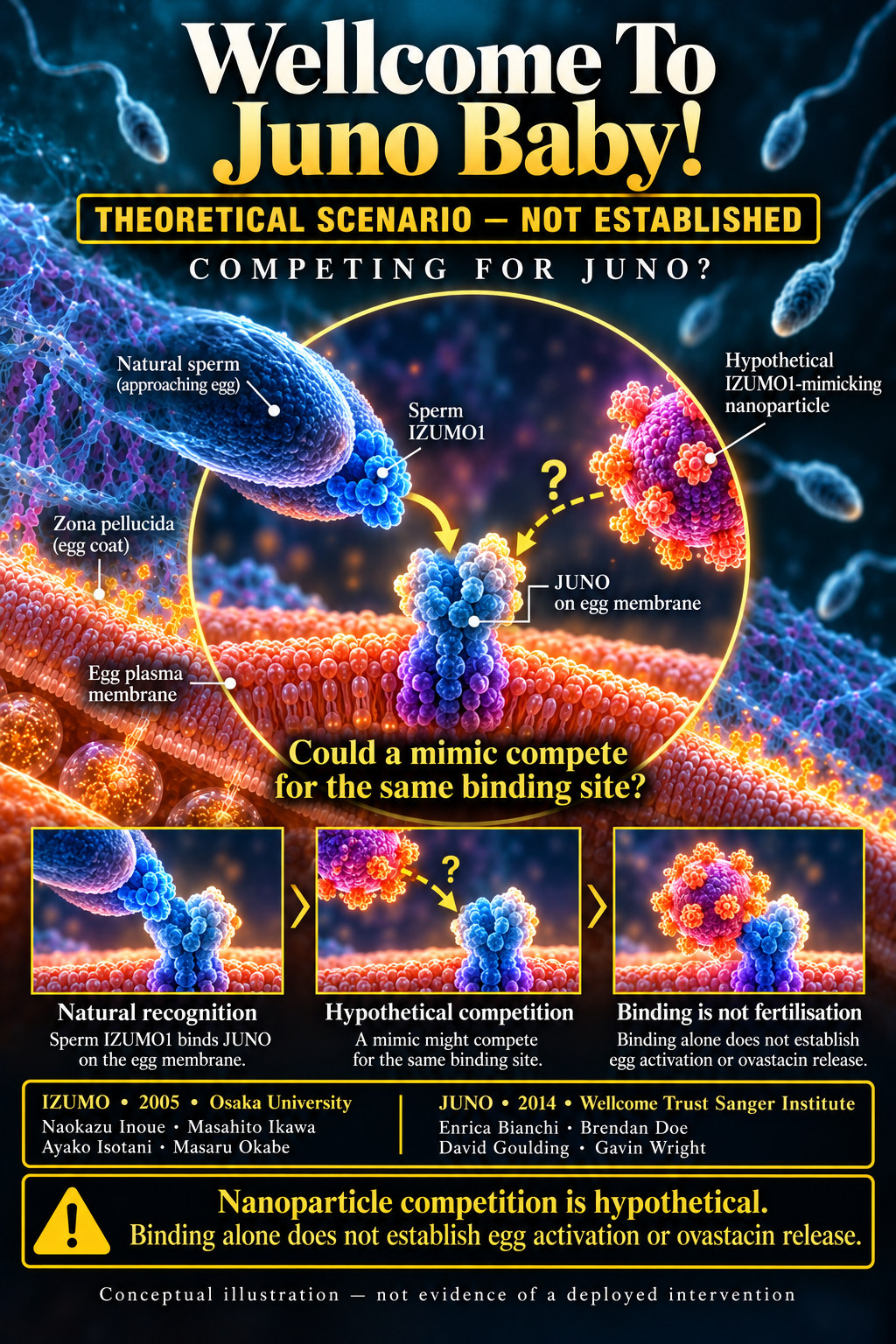
Naokazu Inoue, Masahito Ikawa, Ayako Isotani, and Masaru Okabe reported the IZUMO discovery at Osaka University in 2005. Enrica Bianchi, Brendan Doe, David Goulding, and Gavin Wright reported JUNO’s role at the Wellcome Trust Sanger Institute in 2014. Those are the teams I want credited in the written record.
Why did this catch my attention? Because identifying a molecular interaction gives an investigator a more precise question. Could an intervention disrupt that recognition? What experiments have tested it? Has anyone deliberately investigated these proteins as contraceptive targets? How would the female egg JUNO receptor know the difference between a male human sperm IZUMO1 and a nanoparticle that imitated IZUMO1?
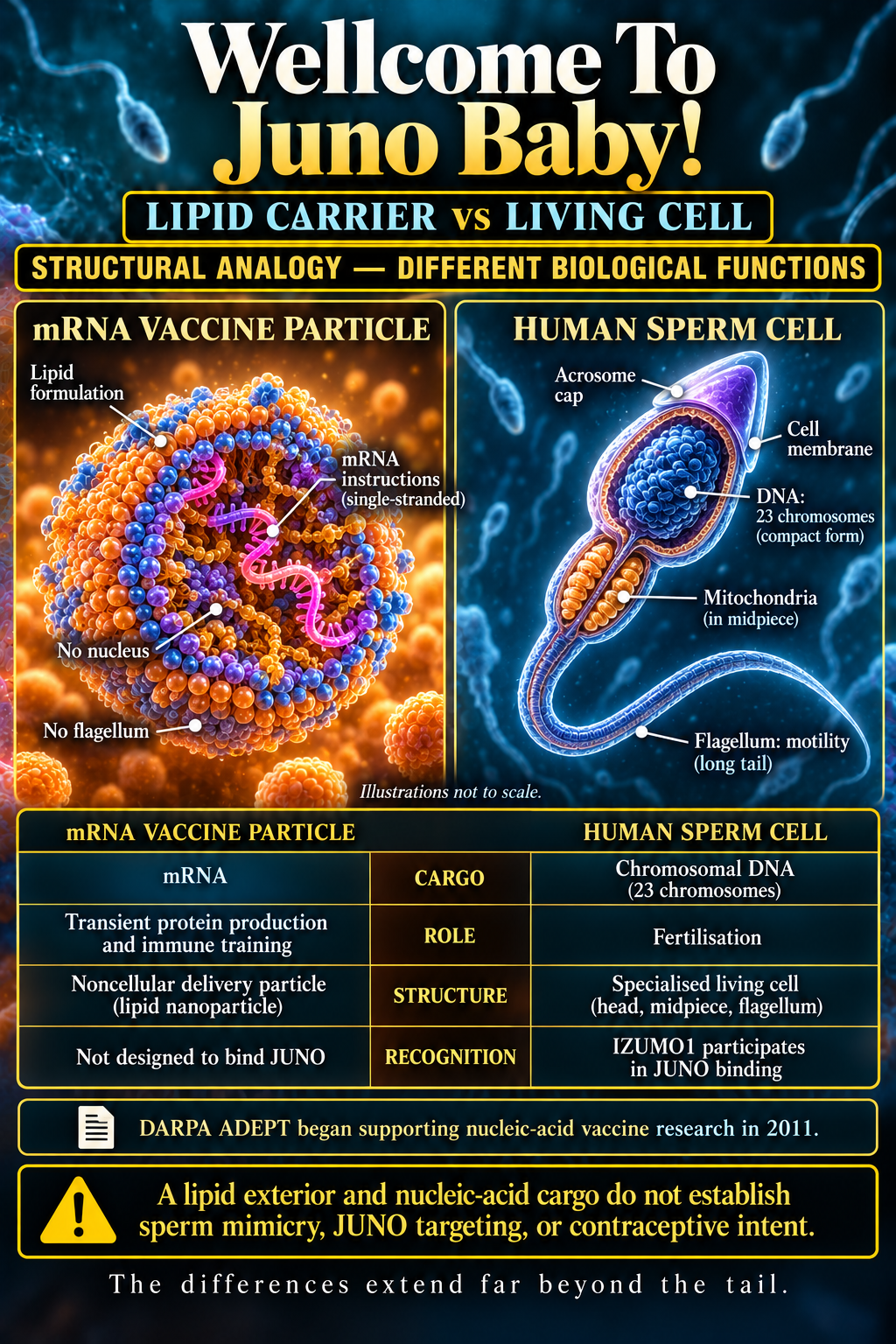
The mRNA vaccine we exposed in the DARPA ADEPT program in March 2020 seemed to try to recapitulate the human sperm cell, with its fat bubble and genetic payload, while leaving only its tail for motility.
That is the point at which I want to open the original literature. The working hypothesis I discussed in the broadcast asks about interference with fertilization. Testing that hypothesis means identifying a particular molecule and measuring what it actually does.
The discovery papers are Juno is the egg Izumo receptor and is essential for mammalian fertilization and The immunoglobulin superfamily protein Izumo is required for sperm to fuse with eggs.
I have developed the surrounding reporting in Fauci And Me – Chapter One – The Convenient Emergence; Chapter Two — The First Envelope And The First Spike.; The mRNA Dialogs – George Webb ‘s Intelligence Network; Coming Soon – National Resilience – Where The Vaccines Really Came From; The Epstein Gates Vaccine Dream Machine.
Following the process from fertilization to implantation
I want readers to be able to picture the sequence. Sperm and egg meet. The recognition and fusion machinery participates in fertilization. The resulting embryo develops and, later, may implant in the uterine lining.
Those stages give us several different reporting questions. A study of sperm movement addresses one part of the process. A study of fertilization addresses another. Implantation, pregnancy loss, menstrual changes, and birth rates each have their own measurements and their own timelines.
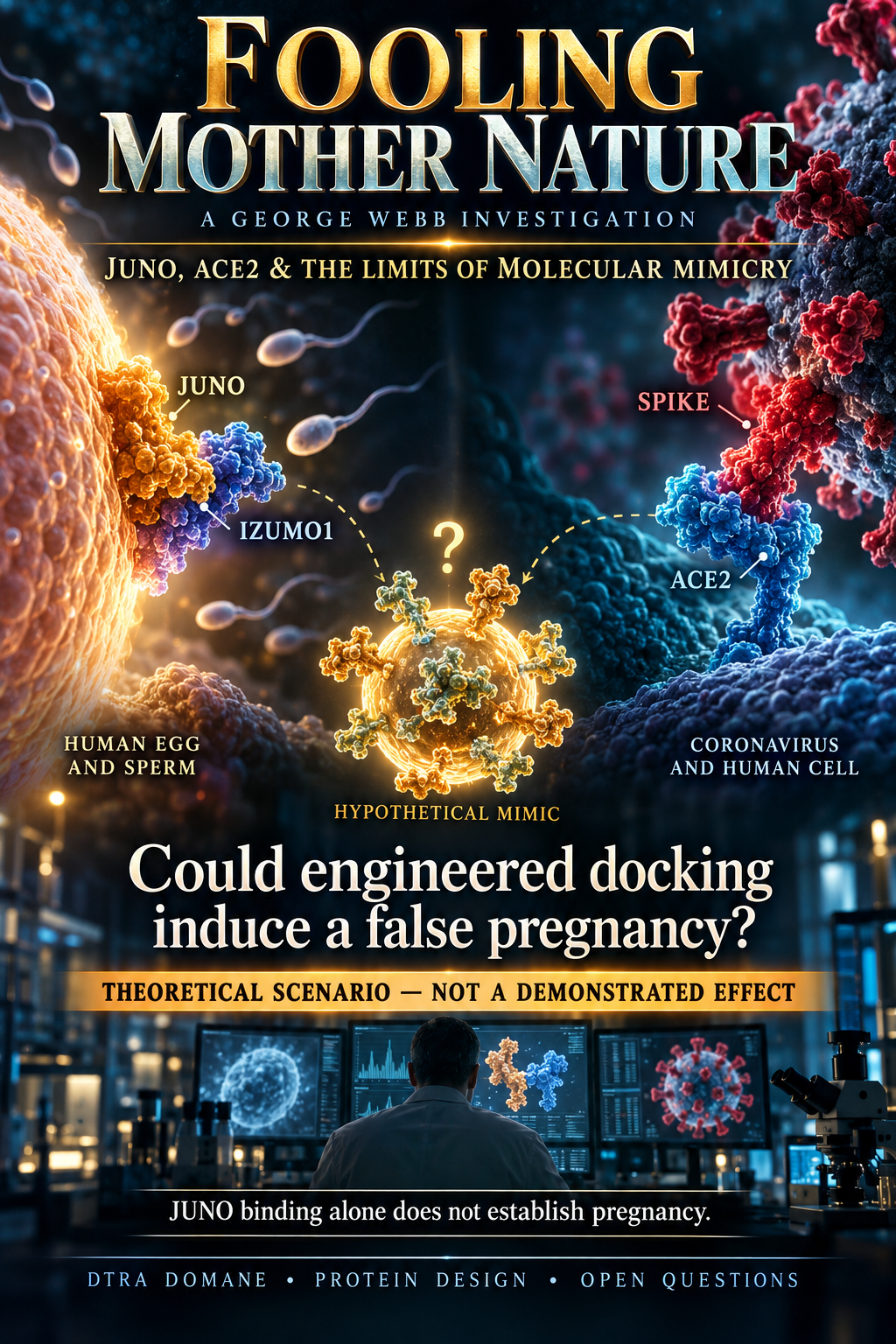
When I return to the Potomac discussion, the central concern is whether an intervention could interfere somewhere along that reproductive sequence. To make that question useful, I need to identify the stage under discussion.
That means asking a study a plain question: what did you measure? Did you observe a receptor interaction, fertilization in a laboratory, implantation after embryo transfer, or pregnancies among couples trying to conceive? I want those distinctions visible so readers can connect the biological question to the appropriate evidence.
I have developed the surrounding reporting in George Webb’s None Dare Call It DARPA; DARPA, NATO, WHO -Part Two – All Bob’s DARPA And DTRA Horses Got A Head Start; NATO, DARPA, WHO – Part One – The White House Comes In With Another Ringing Endorsement Of Potomac Group; NATO DARPA WHO – Part Three – NATO Intel Chiefs Have Corona Fingerprints On Italy Outbreak; NATO, DARPA, WHO – Part Eight – Coup, Coup, Cachou – Coups By Epidemics And Planning – CEPI.
Ovastacin and ZP2: another part of the mechanism
Why do we have the dramatic 50% attachment rates of sperm to the uterine wall after the mRNA shots if the vaccine is not preturbing the fertilization pathway?
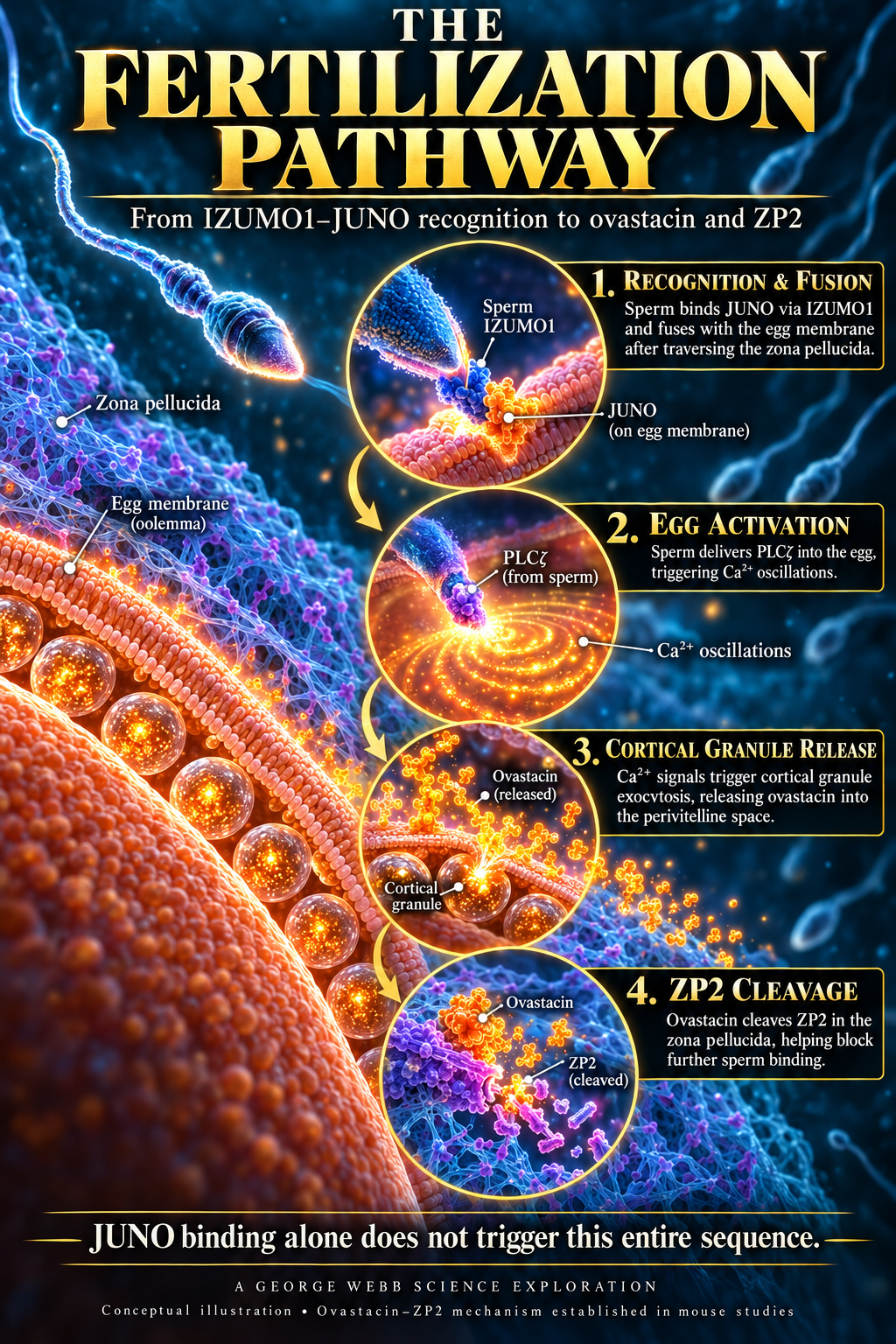
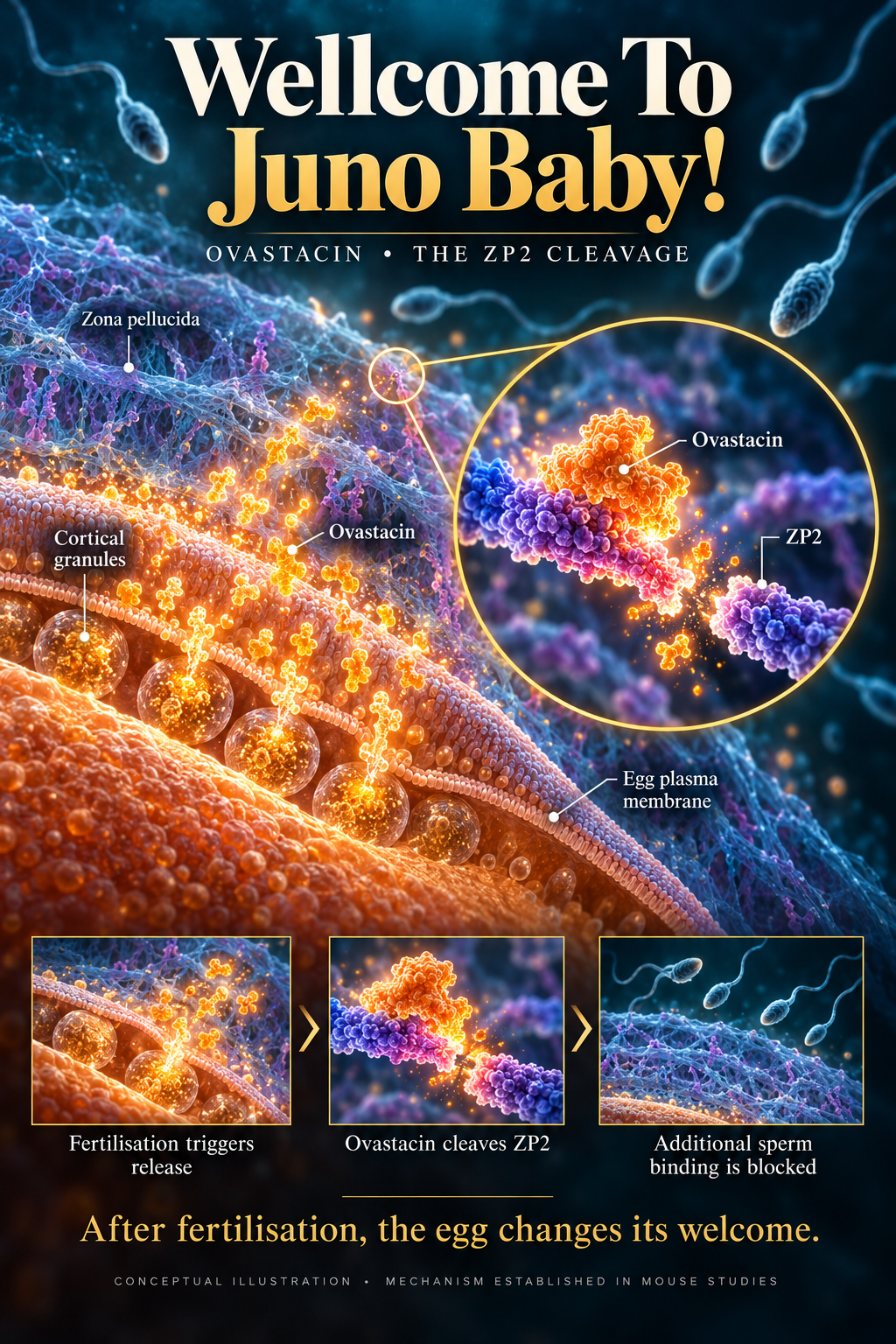
Another protein in this discussion is ZP2, a component of the egg’s surrounding coat, the zona pellucida. The enzyme ovastacin cleaves ZP2 after fertilization as part of the process that helps prevent additional sperm from binding.
The written name is ZP2. Keeping that name straight matters when readers search the literature. It takes us to a specific biological pathway and to experiments that can be examined directly.
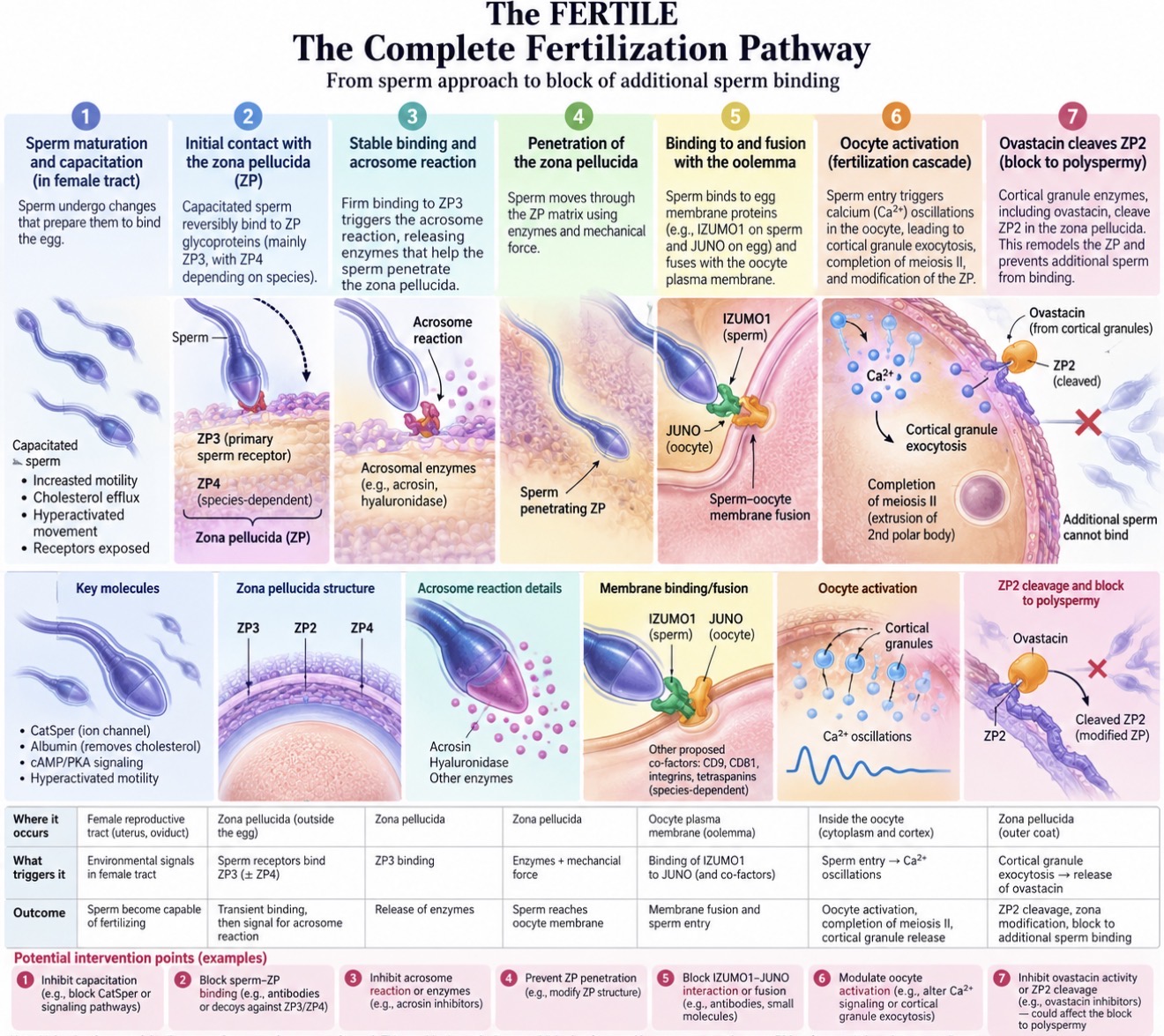
The question I’m pursuing is whether a proposed intervention could affect a pathway involved in successful fertilization. With ZP2 and ovastacin, that question becomes more concrete: what triggers the relevant activity, where does it occur, and what happens to sperm binding?
My interest in this pathway belongs to the larger investigation into reproductive biology. I want the sequence of events laid out clearly enough that a scientist can identify which proposed step is supported and which needs an experiment.
A starting point is the 2012 paper on ovastacin and ZP2 cleavage.
I have developed the surrounding reporting in NATO, DARPA WHO – Part Seven – Trump Just Needs To Say CoronaThrax.; A Few Questions For Bob Malone About DARPA’s DOMANE; The Making Of CoronaThrax – Part Three; The Great Cancering – Part Seven – Are John Brennan And CIA Cancer mRNA Vaccines Next?; Kary Mullis – Part Three – “The E6 Conspiracy”.
The hypothesis I wanted investigated
Here is the question behind my broadcast: could a biological intervention imitate or disrupt a signal involved in sperm–egg recognition and thereby interfere with fertilization?
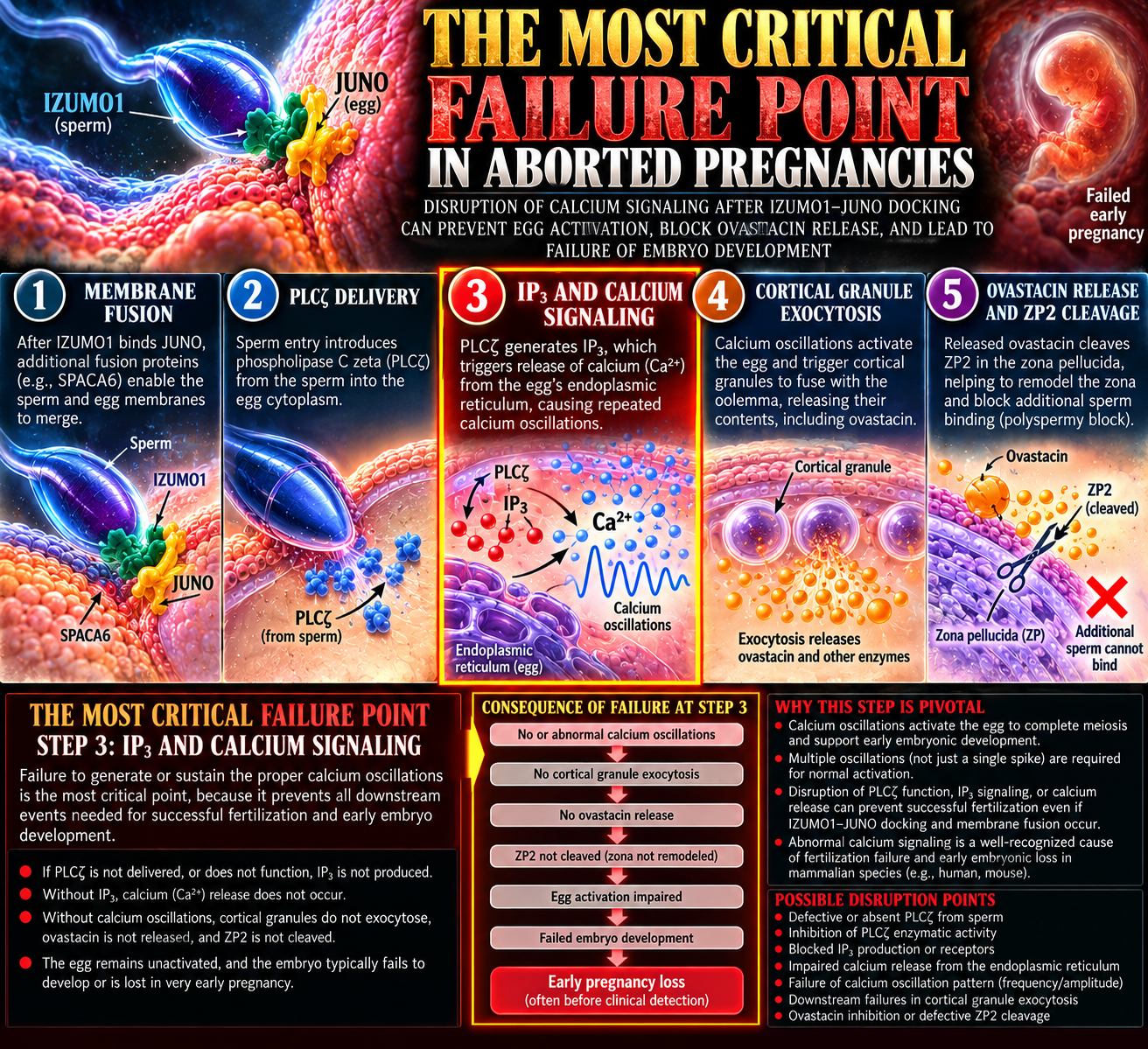
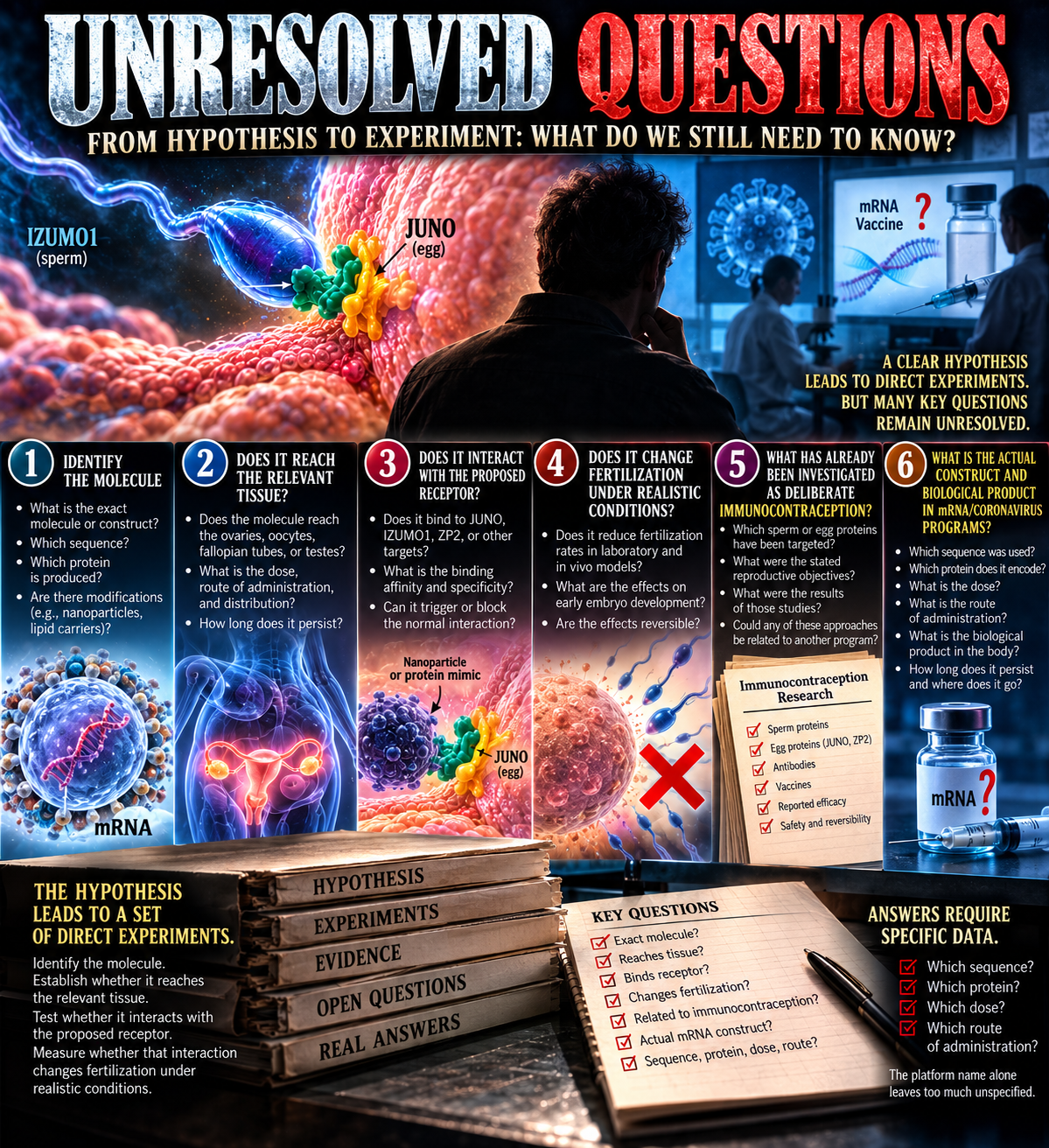
That is the hypothesis. It leads to a set of direct experiments. Identify the molecule. Establish whether it reaches the relevant tissue. Test whether it interacts with the proposed receptor. Measure whether that interaction changes fertilization under realistic conditions.
I also want to know what researchers have already investigated as deliberate immunocontraception. Work targeting a sperm protein has a stated reproductive objective, and its design can be examined. Then I can ask whether any particular connection exists to another program.
For the mRNA and coronavirus questions, I need evidence about the actual construct and its biological product. The platform name alone leaves too much unspecified. Which sequence? Which protein? Which dose? Which route of administration?
Those details are where I want the reporting to go. My broadcast raised a mechanism for investigation; the experiments and source records are how I would establish whether it operates in the setting I’m examining.
I have developed the surrounding reporting in Real Corona Live Exercise – Part One – Return To Patient Zero; NATO, DARPA, WHO – Part Ten – Unraveled NATO – Benassis Everywhere You Looked; The Making Of CoronaThrax, Part One – Kissinger’s CoronaThrax.; The Making Of CoronaThrax – Part Seven – Brussels NATO Testimony; The Making Of CoronaThrax – Part Four – UPMC CancerThrax.
January 2020: when was the direction chosen?
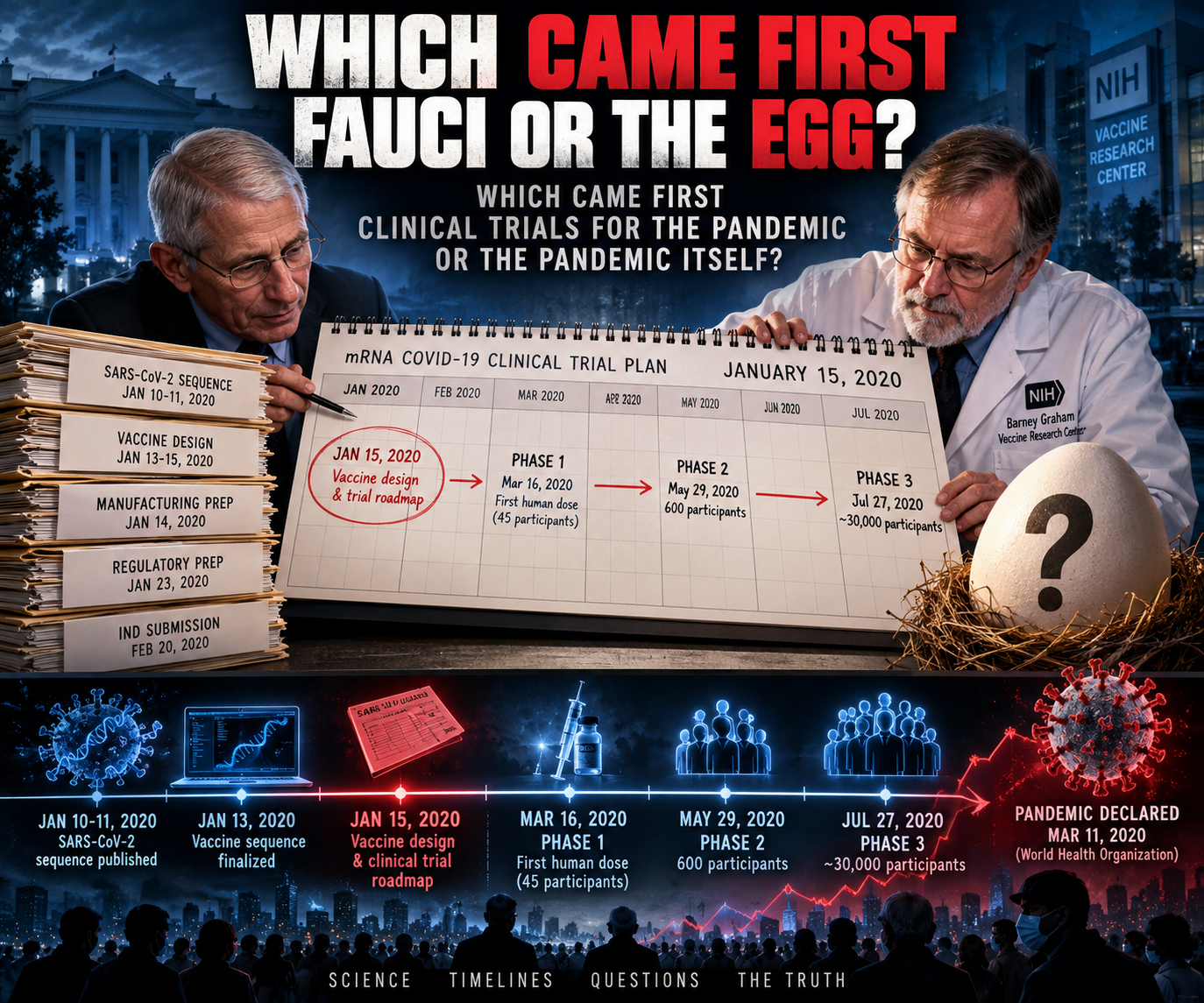
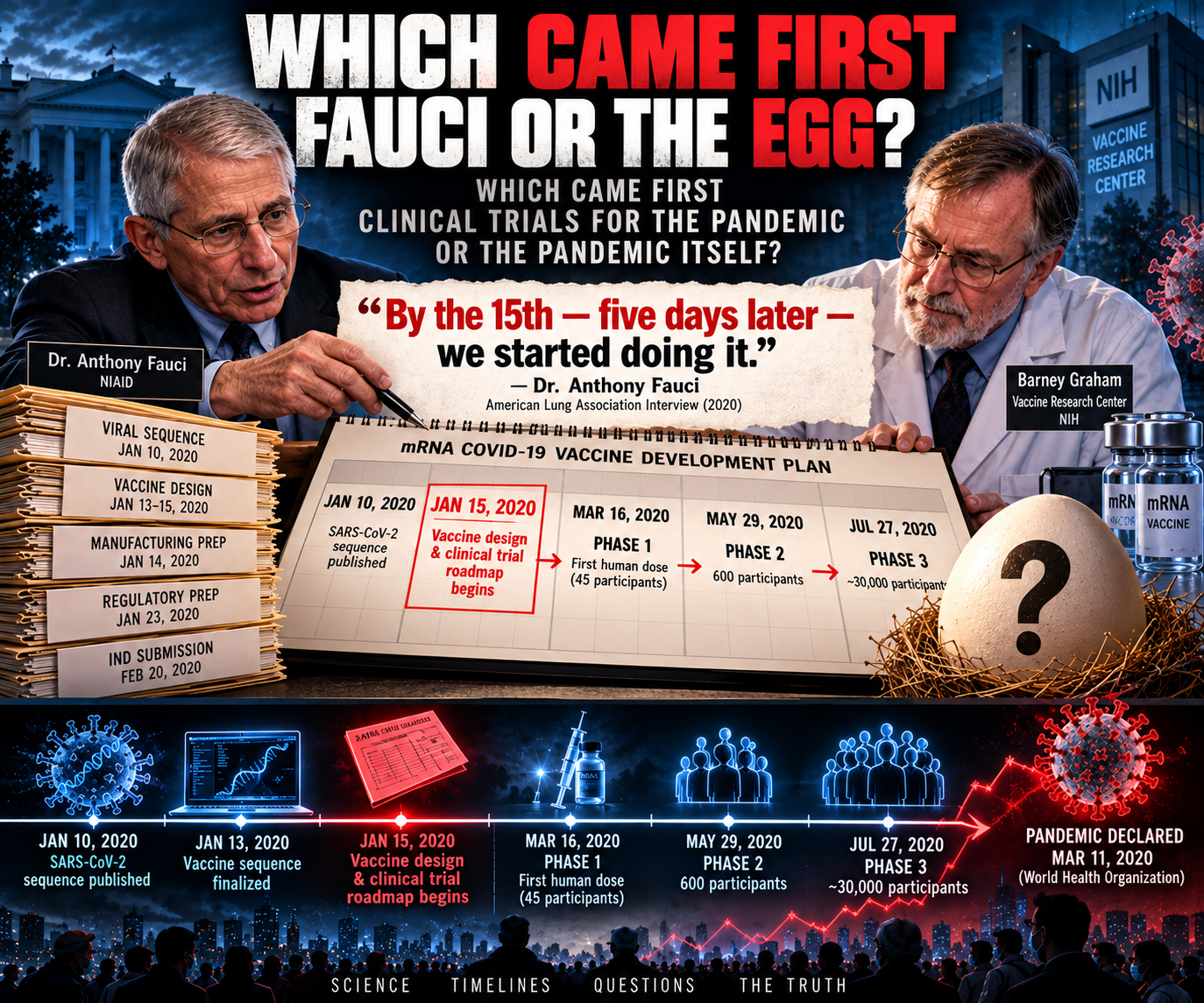
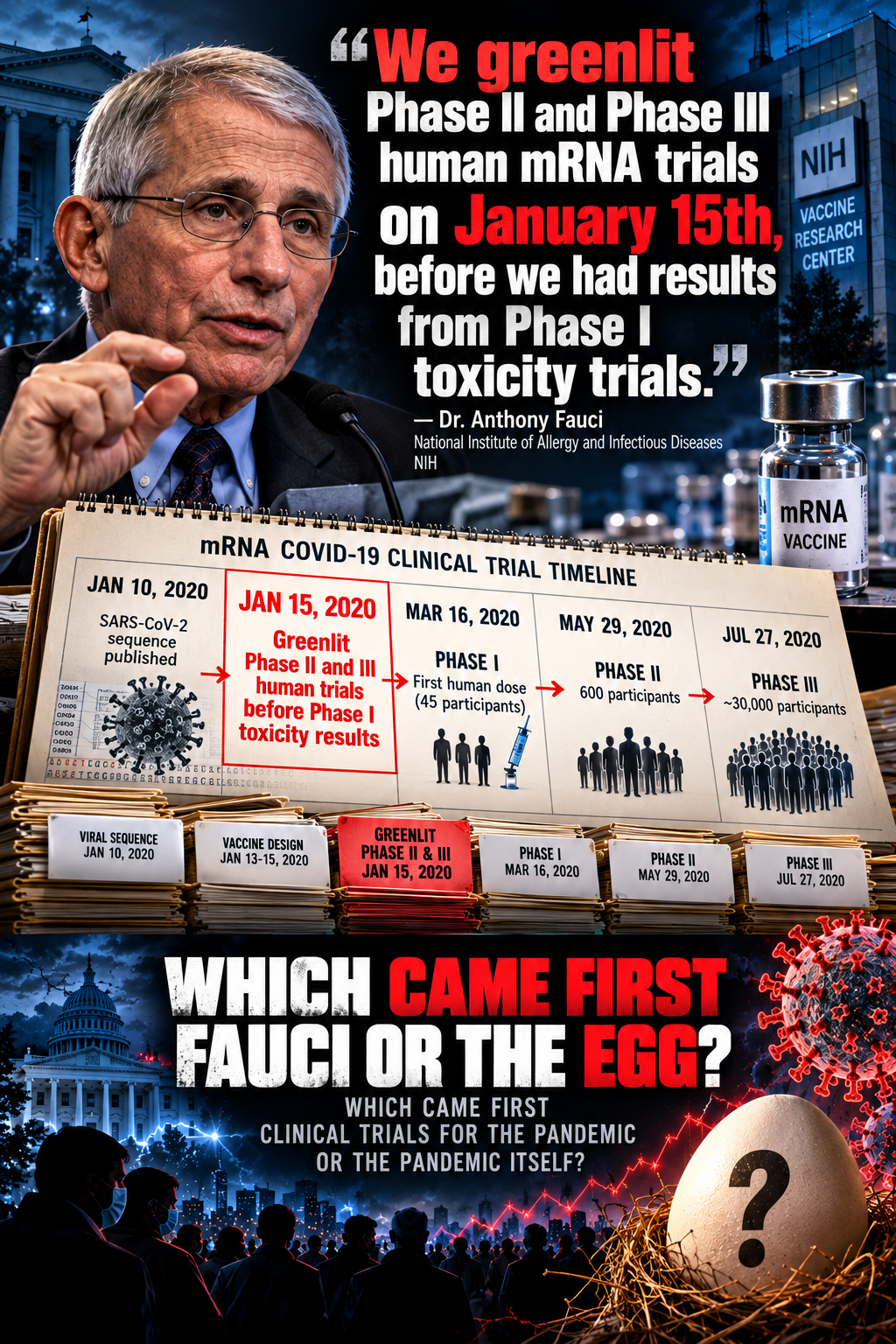
Now put the biology beside the calendar. In my broadcast, I returned to the public release of the viral sequence around January 10, 2020, and to Fauci’s account of an early discussion involving Barney Graham.
What I want to establish is the exact decision: when it happened, who participated, which candidate was selected, and how far the commitment extended. Was the discussion about candidate design? Manufacturing? Clinical development? Preparations for several possible trial phases?
That is the January reporting question. I want the complete interview, the complete quotation, and the contemporaneous records beside it.
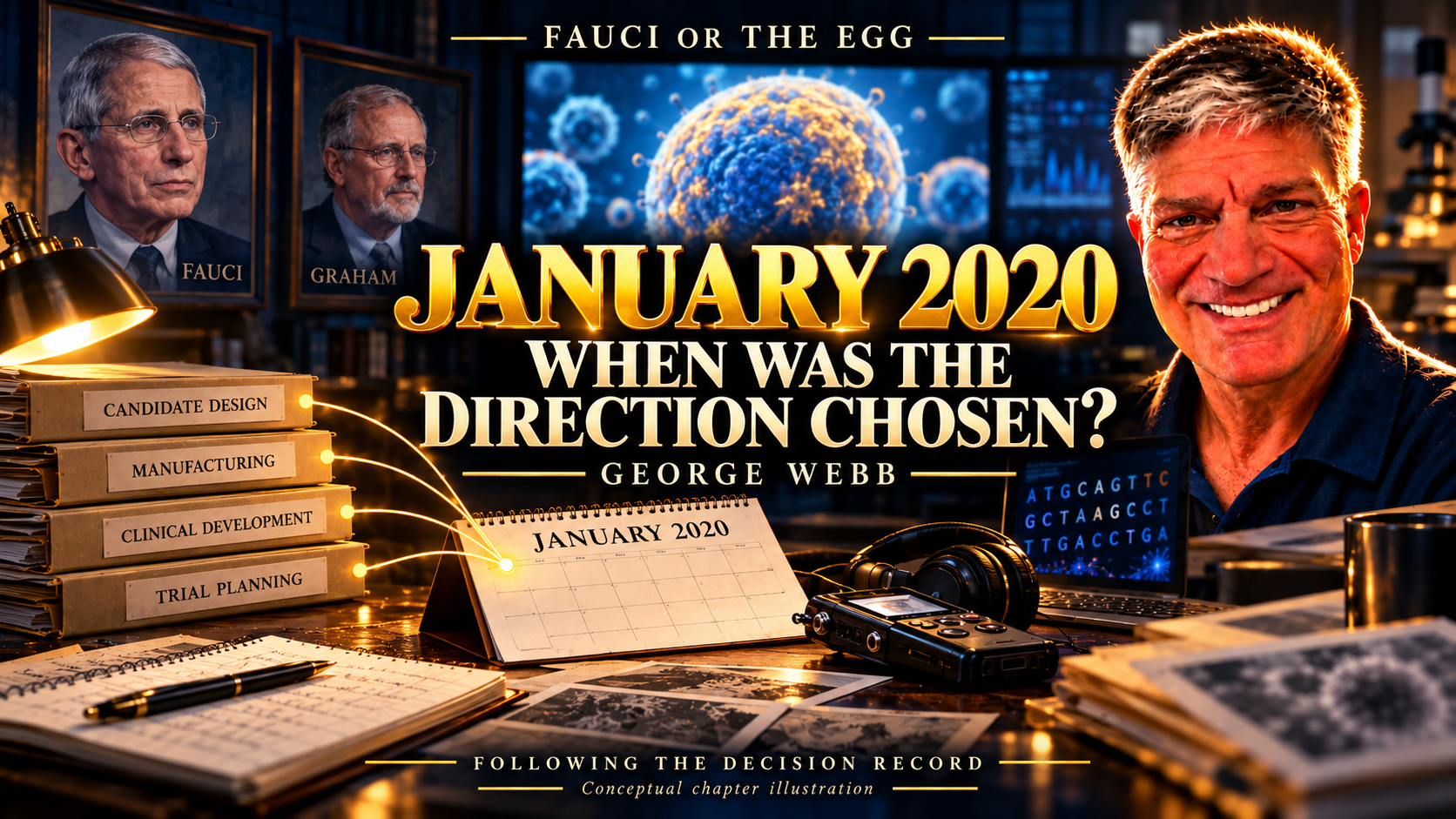
A development decision has its own significance. It can commit money, personnel, manufacturing, and institutional attention long before a volunteer receives a dose. I want to reconstruct those commitments as carefully as the dosing dates.
My concern is how quickly a particular direction became the organizing strategy. To answer that, I’m following the decision record from the earliest planning through the later human studies.
I have developed the surrounding reporting in The Making Of CoronaThrax – Part Eight – Will The WHO’s One Health Initiative Write To Your Genome?; The Making Of CoronaThrax – Part Nine #DiedSuddenly – By DARPA Vax Or By DARPA CoronaThrax Vape?; Part Six – Whoever Finds The CoronaThrax Labs, Wins.; NATO DARPA WHO – Part Two – Virginia Benassi Is Playing All Her Favorite Hits – Corona, Ebola, And Zika.; A Pox Upon Your Lab Monkeys – Yerkes Monkey Labs Have A Rockefeller History Of Bioagents..
Phase I: put the first dose on the calendar
For the NIH–Moderna program, the first human dosing began on March 16, 2020, at Kaiser Permanente Washington Health Research Institute in Seattle. The initial study involved 45 healthy adults.
That date belongs on the calendar beside the January development decisions. It gives us a clear human-trial milestone: a named candidate, a named institution, and an identifiable group of participants.
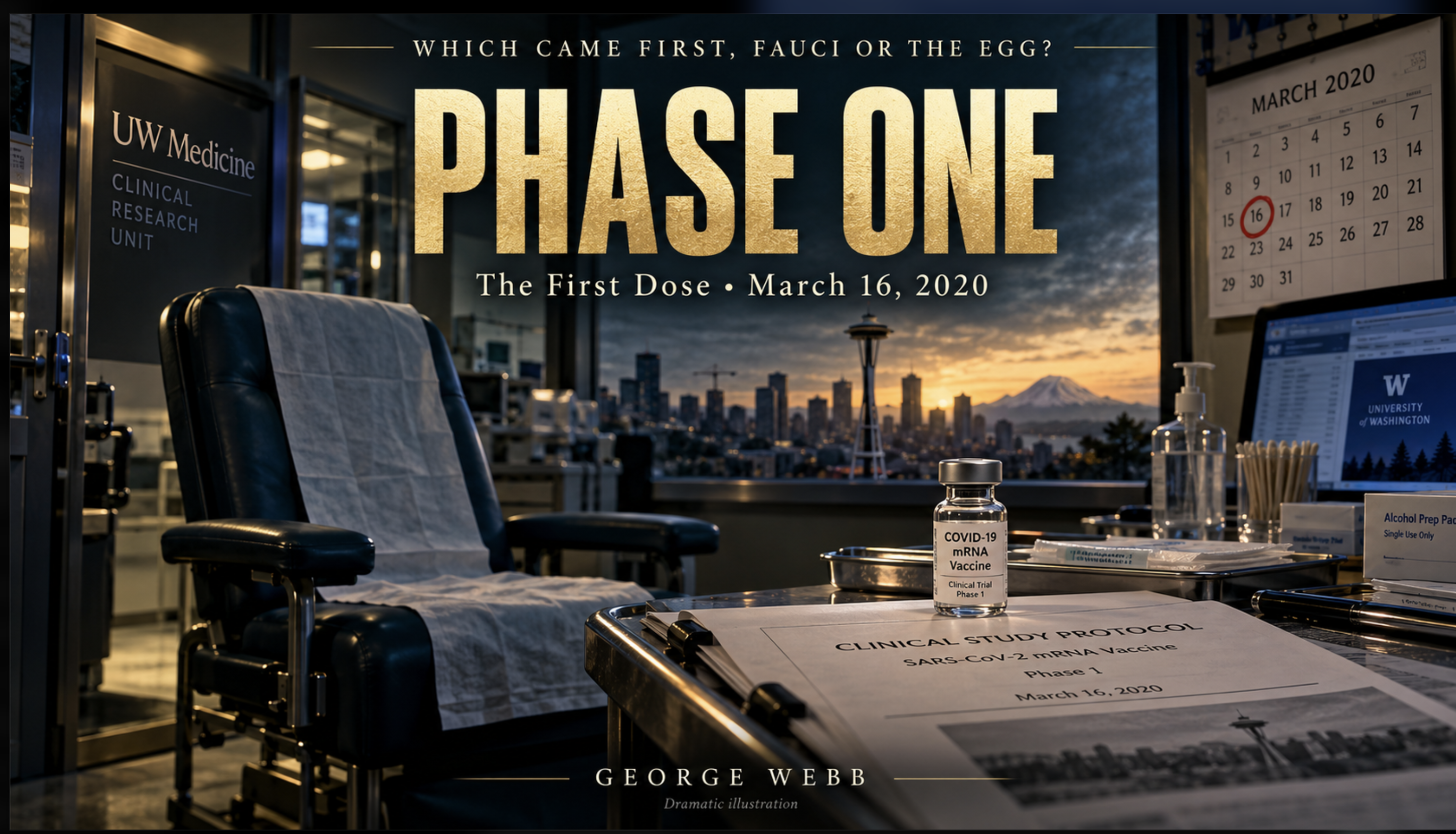
The Phase I questions included safety, reactions to vaccination, and immune responses at different doses. I want readers to look at the protocol, the participant criteria, and the follow-up schedule. What did investigators intend to measure? What did they know when they moved forward?
This also brings me back to what our sources were telling us in March. I want to recover the original language of those communications and match it to the activities underway at the time. Planning, recruitment, and dosing each leave a different documentary trail.
The contemporary record is the NIH announcement of the investigational vaccine trial, March 16, 2020.
I have developed the surrounding reporting in Fauci’s Ouchies Brought To You By Citizen Journalists; Operation Lockdown Resolution – The AIR EBOLA Validation; WE NOW HAVE AN ENDING – Operation Aerosolize Ebola; Erasmus Blood On The Floor Connects All The Deep State Mates; George Webb’s Royal Dutch Virus.
Phase II: the expansion decision
Phase II enrollment for the NIH–Moderna candidate began in late May 2020. The earlier participants were still being followed while the program expanded.
This is where I want to inspect the decision process in detail. Which early observations were available? Which protocol version was approved? What information supported the next step? Which questions were assigned to later follow-up?

The development schedule moved quickly, and the different kinds of work overlapped. Manufacturing, trial planning, site preparation, and participant follow-up can run on different calendars. I want those calendars placed beside one another.
When a source tells me something was happening “at scale,” my next question is: which activity? Large manufacturing preparations and a large enrolled study are both significant, but they have different records.
The documentary task is to recover what was authorized and what actually occurred. That lets readers inspect the accelerated strategy at the points where the important decisions were made.
The NIH report of July 14, 2020 places Phase II enrollment in late May.
I have developed the surrounding reporting in Cracking 9/11 – Part Two – Anthrax To Sina Bavari; Erasmus To The Ukrainian Border – A Bioagent Odyssey; Operation Lockdown – Day Three; The Email Trail Points to Fauci Destruction of Evidence; Restore The Archive – Fauci Criminal Evidence Is Needed.
Phase III: the large study
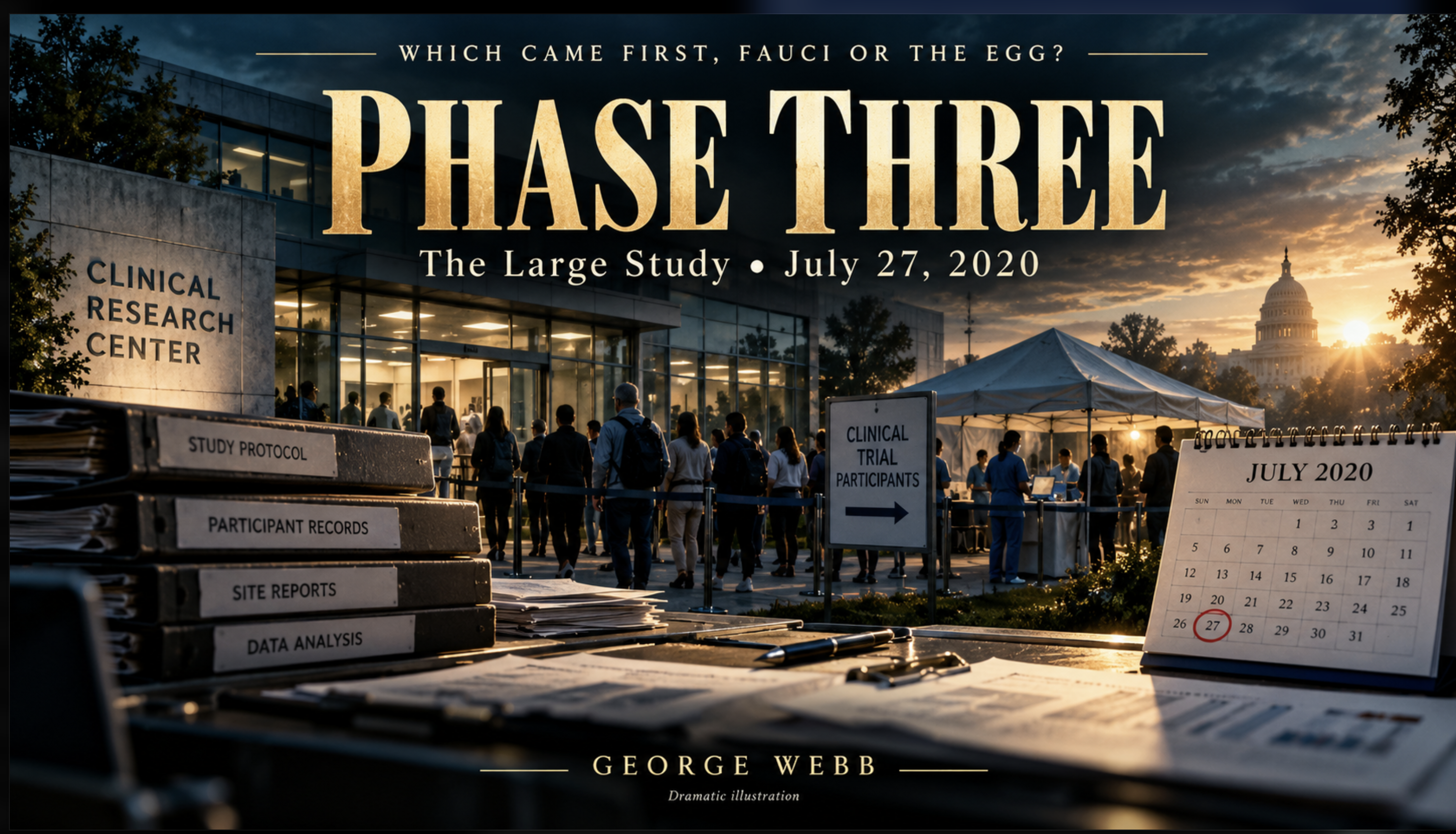
The Phase III NIH–Moderna trial began on July 27, 2020, and ultimately enrolled 30,420 adults. That is the large study I want identified by its own date and participant count.
The chronology for actual human starts in this program runs from March to late May to late July. January is the earlier development period. Keeping those dates in sequence allows me to ask a sharper question about the commitments that preceded each stage.
I want the trial’s stated endpoints, safety reporting, participant criteria, and follow-up alongside the public announcements. What could this design answer? What reproductive questions required separate research? When did those additional studies become available?
This is also where the earlier institutional history becomes useful. A large study needs sites, staff, laboratories, recruiting systems, and monitoring procedures. I want to know how that capacity was assembled and who made the operational decisions.
The starting records are the NIH Phase III announcement and the peer-reviewed trial report announcement.
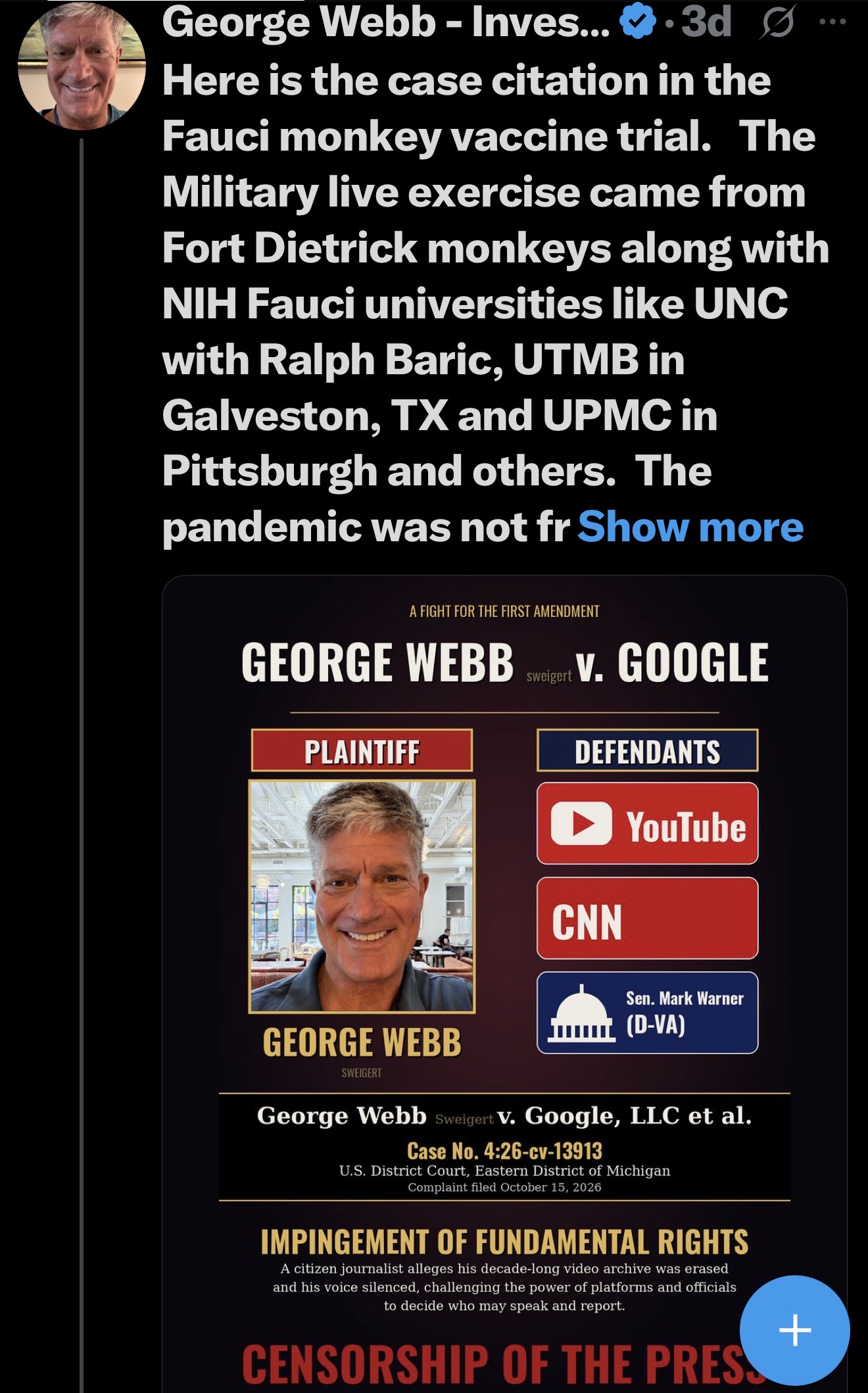
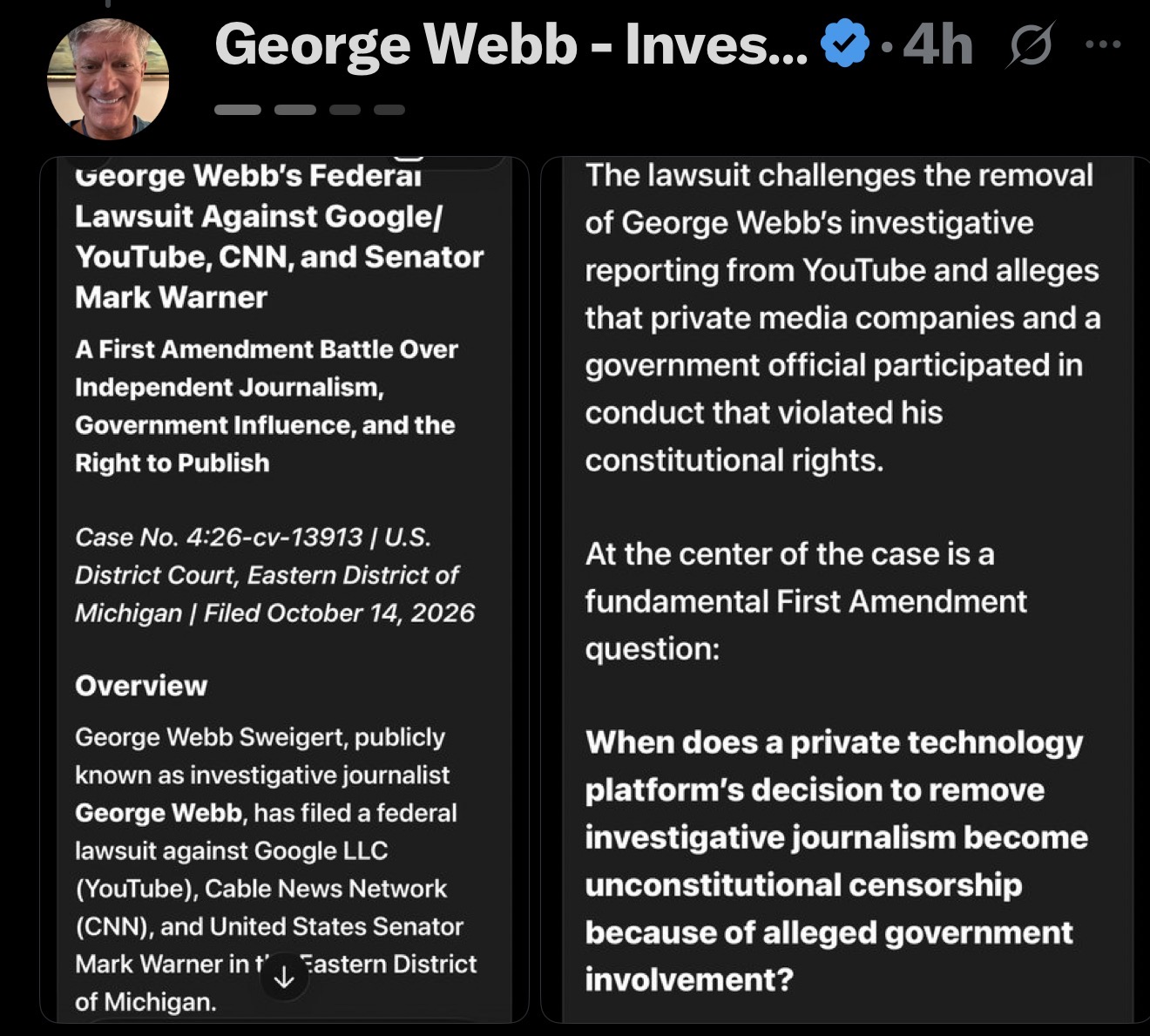
I have developed the surrounding reporting in YouTube Lawsuit – George Webb ‘s Intelligence Network; A Newsroom Worth Defending – YouTube Lawsuit Review; YouTube Just Erased Thousands of My On-Site Reporting Videos; Spoliation Notice For Google And YouTube Class Action; Two Narratives, Only One Right to Report.
Following the clinical networks
One of the questions I kept asking was whether the new effort drew on the people and infrastructure used in earlier HIV research. I want that continuity mapped by name.
Who ran the sites? Who handled laboratory testing? Which institutions managed recruitment? Which investigators moved into the coronavirus program? Which agreements defined their roles?
That is an institutional story with a document trail. A clinical network represents years of training, relationships, procedures, and technical capacity. Following its reuse can explain how a new program mobilized so quickly.
I also want the earlier HIV studies identified individually. The candidate, sponsor, population, and endpoints matter. Each study gives us a specific comparison rather than a broad reference to “the HIV network.”
This is why I keep returning to metadata. The name that appears on two protocols can lead to an interview. A grant can reveal the division of responsibilities. A site agreement can establish when preparations began. Those are the pieces I want assembled into a record readers can inspect.
I have developed the surrounding reporting in Freedom of Speech Is Like Freedom of Movement; The Standard Oil Remedy for YouTube: Rebuilding the Competition That Was Destroyed; Trump Bans CNN—But Banning Isn’t Investigating; Swing State Studios: A Newsroom You Can Walk Into; Two Schools of Thought.
WHO, Wellcome, and the May 2019 lead
At the Potomac gathering, the grandmothers were following material I described as a May 2019 blueprint. In my recollection, Carol and the others became concerned about the direction of preparedness planning and the preference they believed they saw for mRNA.
I want that original material recovered and put in front of readers: its title, issuing institution, date, attachments, and the passages that caught their attention. The procurement questions belong beside the relevant specifications and award records.
WHO, Wellcome, NIH, foundations, universities, and military institutions appear throughout this investigation. I want each organization attached to its actual role. Who funded the project? Who performed the experiment? Who wrote the recommendation? Who made the purchase?
The JUNO discovery, for example, belongs to the Sanger team identified earlier. Questions about other institutions’ involvement lead to a separate search for grants, agreements, and collaborations.
That is how I want to reconstruct the May 2019 lead: start with the document the grandmothers saw and follow the actions connected to it.
I have developed the surrounding reporting in Documentary In The Round; From Lake Erie to the Courthouse: Keep the Record Moving; Profiles In Real Journalism; Courage Needed More Than Penmanship In A Battleground State; Start A Substack Series To Deep Dive A Research Topic.
The Wuhan and military research leads
Our discussions also included reports from sources I described as connected to NIH and military medicine. Some of those reports concerned alleged experimental activity in China, Wuhan, and the period around the Military World Games.
Those were serious leads, and I want the original communications preserved. What exactly did the source report? What was firsthand knowledge? Which candidate, location, date, and administration route did the source identify?
My broadcast mentioned ferritin-based research as well as mRNA. I want the records for each candidate tracked separately so that readers can follow which program a particular allegation concerns.
The date in the spoken account also needs to be settled from the source material. The investigation depends on whether an alleged event occurred before or after the emergency began. I want the original message or recording to anchor that point.
This remains a reporting assignment: recover the testimony, identify the program, locate the documents, and look for independent evidence. That is how I would move these leads into an account that others can examine.
I have developed the surrounding reporting in The Danger Of Being First And Correct; Why I Wrote “No Left Turn at Albuquerque”; OPERATION LOCKDOWN: THE RESOLUTION; Long COVID – Part One – Is CoronaThrax The Cause Of Long COVID?; OPERATION LOCKSTEP Chapter Three: A SENATOR Calls MI6 To Take Out Trump.
What Carol and the grandmothers were asking
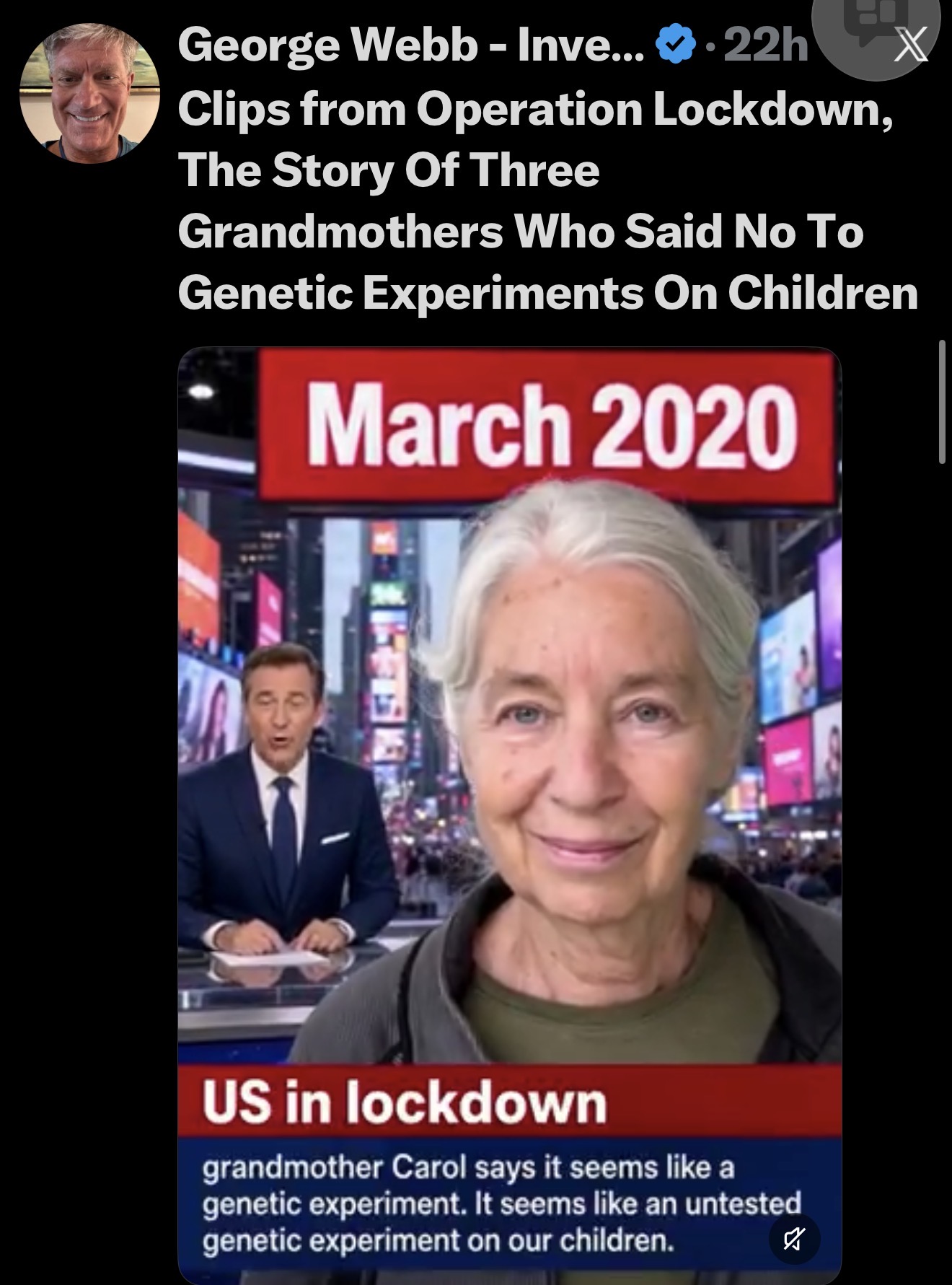
Carol’s comment brings me back to the people around that table. As recorded in the supplied transcript, she said: “It seems like a genetic experiment. It seems like an untested genetic experiment on our children.”
That was her concern in plain language. She was looking ahead to the people who would live with the decisions being made. The grandmothers were asking what had been tested, what remained unknown, and who would answer their questions.

I have met with Carol repeatedly since those early discussions. At later gatherings, we have returned to the documents, the memories, and the reporting. Those meetings matter to me because they keep the original participants involved in reconstructing the record.
I want their contributions preserved in their own words. A recording can fix the date and language of a concern. A saved document can show what prompted it. A witness can help us find the missing piece.
That is the human center of this investigation: people sitting together, reading, asking, and thinking about the next generation.
I have developed the surrounding reporting in George Webb Uranium Starter Pack – The Five Best Articles (Of 140 videos and articles); Michigan at the Front Door: Elections, DNC Sending In Obama, and Quantum and the Chicago Mob; The Seven COVID Suicides; Chasing the Signal — The Final Chapter; New Book – Chasing The Signal.
The fertility evidence I want on the table
When I discuss fertility, I want the actual studies beside the claims. Give me the authors, the population, the exposure, the outcome, and the size of the effect.
If a paper reports a laboratory measurement, I want to know precisely what was measured. If it follows couples trying to conceive, I want the pregnancy outcomes. If it examines birth rates, I want the population and the time period.
Those questions are essential to the investigation I’m trying to build. They allow me to compare a proposed mechanism with what people actually experienced. They also show where more research is needed.
The published record includes a prospective study of more than 2,000 couples that found no reduction in the likelihood of conception associated with COVID-19 vaccination. I have kept the NIH account of that study in the reading trail.
My fertility-targeting concern remains a hypothesis to examine against specific evidence. I want every numerical claim tied to its original paper so readers can see what the finding supports.
I have developed the surrounding reporting in Chasing The Signal – Chapter Two; Epstein Research Receipts Over Last Decade; Epstein Files – Part One – Can We Talk About The DynCorp Tail Numbers Yet?; Epstein – Not A $200 Handmaid’s Tale; The Real Chinatown: Gold, Uranium, and the Chicago Mob’s Land Grab.
Pregnancy questions and the original words
I also want the pregnancy discussion reconstructed from dated statements and trial documents. What did researchers know about pregnancy at each stage? Which participants were included? What follow-up was planned? When were additional results published?
In my broadcast, I used a rhetorical reconstruction to describe the disclosure I believed the public should have received. For the written record, I want Fauci’s actual words beside the date, the question he was answering, and the candidate under discussion.
That is the way to establish what was said about January decisions, the clinical phases, and pregnancy. The full exchange matters.
The grandmothers’ concern was understandable as a demand for information about their families. I want to carry that demand into specific questions for the institutions involved: show the protocol, identify the uncertainties, explain the decision, and provide the follow-up.
That is where this part of the investigation goes next. I want the original recording and the relevant study documents available together, so the chronology can be read without guesswork.
I have developed the surrounding reporting in Epstein Metadata Matches Butler And Charlie Kirk; Some Truths Are Too Big to Tell; George Webb News Update – July 21, 2026; Ehud Barak, Les Wexner, And Jeff Epstein Were Godfathers Of Palantir; ’Tis the Season for Election Hacking.
Why preserving the archive matters to me
This is where the scientific questions meet my dispute with YouTube and CNN. I am trying to reconstruct an investigation whose original broadcasts, comments, and exchanges were part of the public record I built.
My complaint about the loss of that material is practical as well as personal. A broadcast can show what we were asking at the time. A comment can identify a lead. A saved exchange can establish when a source contacted us. Those details are difficult to recreate years later.
I want an inventory of the original recordings, publication dates, removal notices, surviving copies, and associated research. That gives the reporting a foundation and helps readers distinguish the contemporary material from later recollection.
The wider archive also records the newsroom we were building: people gathering, interviewing, traveling, comparing documents, and producing their own work. Some of the linked articles follow other investigations because that broader newsroom history is part of the record I want preserved.
Readers should have access to the trail and the opportunity to examine it.
I have developed the surrounding reporting in Did Epstein Present Palantir’s “Find, Fix, and Finish” At His Directed Evolution Conference; We Played Epstein Chopin While The World Played Chopsticks; The Rhodes Demoralization Plan; Rocking Chairs Vs. Palantir – We Win; Neighborhood News Returns With Stories On Epstein DNA Project And Military DNA Project.
The next documents I’m pursuing
Here is the next reporting assignment as I see it. Recover the March 2020 recordings and notes. Identify the May 2019 material the grandmothers discussed. Obtain the full January account involving Fauci and Barney Graham. Locate the original studies behind the fertility claims.
For each clinical phase, I want protocol drafting, authorization, recruitment, enrollment, dosing, analysis, and publication placed on a single chronology. Each entry needs the candidate, sponsor, location, and source document.

For the biological question, I want the proposed molecule, the receptor interaction, the relevant exposure, and a measured reproductive outcome. For an allegation about intent, I want the record of the objective and the decisions made to pursue it.
This is work that citizen journalists can help do. Find the recording. Preserve the attachment. Track the grant. Read the protocol. Ask the investigator a precise question.
The goal is a public record detailed enough that another person can follow the same route, open the same sources, and inspect the connections.
I have developed the surrounding reporting in Neighborhood News, Health, And Wealth; Less Tragedy, More Hope — Day 3; Did Dr. Soon-Shiong Tell Tucker Carlson About The Cape Town Prison Vax?; Dave Underdown: Historical Discussion and Related George Webb Links; Stayin Alive – George Webb ‘s Intelligence Network.
The question I’m carrying forward
I keep returning to the Potomac because that gathering explains the questions we were asking before the later arguments hardened into familiar positions. We had people around a table, documents on screens, and concern for children and grandchildren.
Today, I want the chronology sharper and the source record more accessible. I want the January development decisions examined alongside the March, May, and July clinical milestones. I want JUNO and IZUMO1 discussed with the underlying biology in view. I want the fertility hypothesis tested against named studies and identifiable experiments.

And I want Carol and the other grandmothers to remain part of the story. They asked what the decisions would mean for their families. That question deserves a clear answer supported by an accessible record.
For me, preserving the archive is part of preserving the investigation. The people, the dates, the documents, and the original words belong together.
If people cannot ask questions about decisions affecting their children and grandchildren, what is free speech worth? I’m going to keep asking, keep gathering the records, and keep putting the work where readers can examine it.
I have developed the surrounding reporting in Iran Contra Friends Go To Washington; Was Candace Used To Torpedo Citizen Journalism?; CIA-Sponsored Dr. Soon-Shiong Hides John Brennan from Immunity Bio; The Most Important Speech Since Philadelphia; Summary of “Deep State Mate.
Appendix: research references
I’ve retained these 100 research references as a reading desk for the investigation: 30 on JUNO, IZUMO-family proteins, and fertilization; 40 on HIV vaccine research; and 30 on HIV and reproductive outcomes. Each paper addresses its own research question.
JUNO / IZUMO1 and fertilization
1. Juno is the egg Izumo receptor and is essential for mammalian fertilization. Bianchi E, Doe B, Goulding D, Wright GJ et al.. Nature. 2014. PMID: 24739963.
2. The immunoglobulin superfamily protein Izumo is required for sperm to fuse with eggs. Inoue N, Ikawa M, Isotani A, Okabe M et al.. Nature. 2005. PMID: 15759005.
3. Ovastacin, a cortical granule protease, cleaves ZP2 in the zona pellucida to prevent polyspermy. Burkart AD, Xiong B, Baibakov B, Jiménez-Movilla M et al.. The Journal of cell biology. 2012. PMID: 22472438.
4. MAIA, Fc receptor-like 3, supersedes JUNO as IZUMO1 receptor during human fertilization. Vondrakova J, Frolikova M, Ded L, Cerny J et al.. Science advances. 2022. PMID: 36070373.
5. Alternative splicing of the Izumo1 gene ensures triggering gamete fusion in mice. Saito T, Wada I, Inoue N. Scientific reports. 2019. PMID: 30816314.
6. IZUMO family member 3, IZUMO3, is involved in male fertility through the acrosome formation. Inoue N, Satouh Y, Wada I. Molecular reproduction and development. 2021. PMID: 34114279.
7. Monitoring dimeric status of IZUMO1 during the acrosome reaction in living spermatozoon. Inoue N, Wada I. Cell cycle (Georgetown, Tex.). 2018. PMID: 29954238.
8. The interaction between Tu-Izumo1 and Tu-JUNO is involved in turtles hybridization. Dong J, Liu S, Wang Z, Zheng K et al.. Reproduction (Cambridge, England). 2021. PMID: 34314375.
9. Oocyte-triggered dimerization of sperm IZUMO1 promotes sperm-egg fusion in mice. Inoue N, Hagihara Y, Wright D, Suzuki T et al.. Nature communications. 2015. PMID: 26568141.
10. Structure of IZUMO1-JUNO reveals sperm-oocyte recognition during mammalian fertilization. Ohto U, Ishida H, Krayukhina E, Uchiyama S et al.. Nature. 2016. PMID: 27309808.
11. Investigation of recombinant mouse sperm protein izumo as a potential immunocontraceptive antigen. Wang DG, Huang TH, Xie QD, An G et al.. American journal of reproductive immunology (New York, N.Y. : 1989). 2008. PMID: 18275515.
12. Allosteric inhibition of the IZUMO1-JUNO fertilization complex by the naturally occurring antisperm antibody OBF13. Lu Y, Ikawa M, Tang S. Proceedings of the National Academy of Sciences of the United States of America. 2025. PMID: 40042902.
13. Expression, structure and function analysis of the sperm-oocyte fusion genes Juno and Izumo1 in sheep (Ovis aries). Hu W, Dong X, Tian Z, Zhang Z et al.. Journal of animal science and biotechnology. 2021. PMID: 33706805.
14. Uncovering the Role of IZUMO Family Members in Human Fertilization. Manjon AA, Verón GL, Garay SA, Juarez A et al.. Molecular reproduction and development. 2025. PMID: 40760720.
15. Structural and functional insights into IZUMO1 recognition by JUNO in mammalian fertilization. Kato K, Satouh Y, Nishimasu H, Kurabayashi A et al.. Nature communications. 2016. PMID: 27416963.
16. Genetic diversity in the IZUMO1-JUNO protein-receptor pair involved in human reproduction. Allingham J, Floriano WB. PloS one. 2021. PMID: 34879103.
17. Location and expression of Juno in mice oocytes during maturation. Suzuki B, Sugano Y, Ito J, Saito H et al.. JBRA assisted reproduction. 2017. PMID: 29124919.
18. Sperm IZUMO1-Dependent Gamete Fusion Influences Male Fertility in Mice. Saito T, Wada I, Inoue N. International journal of molecular sciences. 2019. PMID: 31569716.
19. JUNO, the receptor of sperm IZUMO1, is expressed by the human oocyte and is essential for human fertilisation. Jean C, Haghighirad F, Zhu Y, Chalbi M et al.. Human reproduction (Oxford, England). 2019. PMID: 30517645.
20. GLIPR1L1 is an IZUMO-binding protein required for optimal fertilization in the mouse. Gaikwad AS, Anderson AL, Merriner DJ, O’Connor AE et al.. BMC biology. 2019. PMID: 31672133.
21. Expression of IZUMO1 and JUNO in the gonads of domestic cats (Felis catus). Sanguansook P, Rodprasert W, Sawangmake C, Gimeno L et al.. Theriogenology. 2024. PMID: 38484673.
22. The structure of sperm Izumo1 reveals unexpected similarities with Plasmodium invasion proteins. Nishimura K, Han L, Bianchi E, Wright GJ et al.. Current biology : CB. 2016. PMID: 27374339.
23. Progress of sperm IZUMO1 relocation during spontaneous acrosome reaction. Sebkova N, Ded L, Vesela K, Dvorakova-Hortova K et al.. Reproduction (Cambridge, England). 2014. PMID: 24277869.
24. Sperm IZUMO1 Is Required for Binding Preceding Fusion With Oolemma in Mice and Rats. Matsumura T, Noda T, Satouh Y, Morohoshi A et al.. Frontiers in cell and developmental biology. 2021. PMID: 35096839.
25. GSTM3, but not IZUMO1, is a cryotolerance marker of boar sperm. Llavanera M, Delgado-Bermúdez A, Fernandez-Fuertes B, Recuero S et al.. Journal of animal science and biotechnology. 2019. PMID: 31391940.
26. Multi-state catch bond formed in the Izumo1:Juno complex that initiates human fertilization. Boult S, Pacak P, Yang B, Liu H et al.. Nature communications. 2025. PMID: 40858532.
27. Changes of IZUMO1 in bull spermatozoa during the maturation, acrosome reaction, and cryopreservation. Fukuda M, Sakase M, Fukushima M, Harayama H et al.. Theriogenology. 2016. PMID: 27527404.
28. In silico Docking Analysis for Blocking JUNO-IZUMO1 Interaction Identifies Two Small Molecules that Block in vitro Fertilization. Stepanenko N, Wolk O, Bianchi E, Wright GJ et al.. Frontiers in cell and developmental biology. 2022. PMID: 35478965.
29. Molecular dynamics of JUNO-IZUMO1 complexation suggests biologically relevant mechanisms in fertilization. Pacak P, Kluger C, Vogel V. Scientific reports. 2023. PMID: 37990051.
30. Izumo1 and Juno: the evolutionary origins and coevolution of essential sperm-egg binding partners. Grayson P. Royal Society open science. 2015. PMID: 27019721.
HIV vaccine clinical research
31. Phase I randomized clinical trial of VRC DNA and rAd5 HIV-1 vaccine delivery by intramuscular (i.m.), subcutaneous (s.c.) and intradermal (i.d.) administration (VRC 011). Enama ME, Ledgerwood JE, Novik L, Nason MC et al.. PloS one. 2014. PMID: 24621858.
32. Medical eligibility, comprehension of the consent process, and retention of injection drug users recruited for an HIV vaccine trial. Harrison K, Vlahov D, Jones K, Charron K et al.. Journal of acquired immune deficiency syndromes and human retrovirology : official publication of the International Retrovirology Association. 1995. PMID: 7552502.
33. Cell-Mediated Immune Predictors of Vaccine Effect on Viral Load and CD4 Count in a Phase 2 Therapeutic HIV-1 Vaccine Clinical Trial. Huang Y, Pantaleo G, Tapia G, Sanchez B et al.. EBioMedicine. 2017. PMID: 28970080.
34. Studies of a prophylactic HIV-1 vaccine candidate based on modified vaccinia virus Ankara (MVA) with and without DNA priming: effects of dosage and route on safety and immunogenicity. Peters BS, Jaoko W, Vardas E, Panayotakopoulos G et al.. Vaccine. 2007. PMID: 17250931.
35. Immunoglobulin genes and the acquisition of HIV infection in a randomized trial of recombinant adenovirus HIV vaccine. Pandey JP, Namboodiri AM, Bu S, De Dieu Tapsoba J et al.. Virology. 2013. PMID: 23582638.
36. HIV-specific Th2 and Th17 responses predict HIV vaccine protection efficacy. Sauce D, Gorochov G, Larsen M. Scientific reports. 2016. PMID: 27324186.
37. RV144 HIV-1 vaccination impacts post-infection antibody responses. Mdluli T, Jian N, Slike B, Paquin-Proulx D et al.. PLoS pathogens. 2020. PMID: 33290394.
38. Baseline Ad5 serostatus does not predict Ad5 HIV vaccine-induced expansion of adenovirus-specific CD4+ T cells. Hutnick NA, Carnathan DG, Dubey SA, Makedonas G et al.. Nature medicine. 2009. PMID: 19620962.
39. Glycan-reactive antibodies isolated from human HIV-1 vaccine trial participants show broad pathogen cross-reactivity. Jamieson PJ, Shen X, Abu-Shmais AA, Wasdin PT et al.. Journal of virology. 2025. PMID: 41212034.
40. Adjuvanted HIV-1 vaccine promotes antibody-dependent phagocytic responses and protects against heterologous SHIV challenge. Om K, Paquin-Proulx D, Montero M, Peachman K et al.. PLoS pathogens. 2020. PMID: 32881968.
41. HIV-1 vaccine-induced C1 and V2 Env-specific antibodies synergize for increased antiviral activities. Pollara J, Bonsignori M, Moody MA, Liu P et al.. Journal of virology. 2014. PMID: 24807721.
42. Safety and immunogenicity of an HIV vaccine trial with DNA prime and replicating vaccinia boost. Liu Y, Lv W, Shan P, Li D et al.. Signal transduction and targeted therapy. 2025. PMID: 40593459.
43. Immune correlates analysis of the Imbokodo (HVTN 705/HPX2008) efficacy trial of a mosaic HIV-1 vaccine regimen evaluated in Southern African people assigned female sex at birth: a two-phase case-control study. Kenny A, van Duijn J, Dintwe O, Heptinstall J et al.. EBioMedicine. 2024. PMID: 39236556.
44. Candidate correlates of protection in the HVTN505 HIV-1 vaccine efficacy trial identified by positive-unlabeled learning. Xu S, Hudson A, Janes HE, Tomaras GD et al.. PLoS computational biology. 2025. PMID: 41296783.
45. Efficacy and safety of a mosaic HIV-1 vaccine regimen in men who have sex with men and transgender individuals (HVTN 706/HPX3002/Mosaico): a global, randomised, double-blind, placebo-controlled, phase 3 trial. Buchbinder SP, Spinosa Guzman S, Sanchez J, Willems W et al.. The lancet. HIV. 2025. PMID: 41314741.
46. Preexisting memory CD4+ T cells contribute to the primary response in an HIV-1 vaccine trial. Campion SL, Brenna E, Thomson E, Fischer W et al.. The Journal of clinical investigation. 2021. PMID: 34850742.
47. Measles immunity gap among reproductive-age women participating in a simulated HIV vaccine efficacy trial in Zambia. Malama K, Tichacek A, Kelly H, Parker R et al.. Human vaccines & immunotherapeutics. 2022. PMID: 35446726.
48. Human gut microbiota is associated with HIV-reactive immunoglobulin at baseline and following HIV vaccination. Cram JA, Fiore-Gartland AJ, Srinivasan S, Karuna S et al.. PloS one. 2019. PMID: 31869338.
49. Immune correlates of the Thai RV144 HIV vaccine regimen in South Africa. Gray GE, Huang Y, Grunenberg N, Laher F et al.. Science translational medicine. 2019. PMID: 31534016.
50. Analysis of the HIV Vaccine Trials Network 702 Phase 2b-3 HIV-1 Vaccine Trial in South Africa Assessing RV144 Antibody and T-Cell Correlates of HIV-1 Acquisition Risk. Moodie Z, Dintwe O, Sawant S, Grove D et al.. The Journal of infectious diseases. 2022. PMID: 35758878.
51. FCGR2C polymorphisms associate with HIV-1 vaccine protection in RV144 trial. Li SS, Gilbert PB, Tomaras GD, Kijak G et al.. The Journal of clinical investigation. 2014. PMID: 25105367.
52. Exploring evidence for behavioral risk compensation among participants in an HIV vaccine clinical trial. Painter JE, DiClemente RJ, Jimenez L, Stuart T et al.. Vaccine. 2017. PMID: 28533053.
53. Innate immune cell activation after HIV-1 vaccine administration is associated with increased antibody production. N’guessan KF, Machmach K, Swafford I, Costanzo MC et al.. Frontiers in immunology. 2024. PMID: 38420129.
54. The multi-epitope polypeptide approach in HIV-1 vaccine development. Cano CA. Genetic analysis : biomolecular engineering. 1999. PMID: 10596755.
55. Induction of Neutralizing Responses against Autologous Virus in Maternal HIV Vaccine Trials. Hompe ED, Mangold JF, Kumar A, Eudailey JA et al.. mSphere. 2020. PMID: 32493720.
56. T Cell Immunogenicity, Gene Expression Profile, and Safety of Four Heterologous Prime-Boost Combinations of HIV Vaccine Candidates in Healthy Volunteers: Results of the Randomized Multi-Arm Phase I/II ANRS VRI01 Trial. Richert L, Lelièvre JD, Lacabaratz C, Hardel L et al.. Journal of immunology (Baltimore, Md. : 1950). 2022. PMID: 35613727.
57. Perception of potential harm and benefits of HIV vaccine trial participation: A qualitative study from urban Tanzania. Tarimo EAM, Ambikile J, Munseri P, Bakari M et al.. PloS one. 2019. PMID: 31703092.
58. An adjuvanted polyprotein HIV-1 vaccine induces polyfunctional cross-reactive CD4+ T cell responses in seronegative volunteers. Van Braeckel E, Bourguignon P, Koutsoukos M, Clement F et al.. Clinical infectious diseases : an official publication of the Infectious Diseases Society of America. 2011. PMID: 21208909.
59. A therapeutic HIV-1 vaccine enhances anti-HIV-1 immune responses in patients under highly active antiretroviral therapy. Tung FY, Tung JK, Pallikkuth S, Pahwa S et al.. Vaccine. 2016. PMID: 27002500.
60. HIV-1 vaccine induced immune responses in newborns of HIV-1 infected mothers. McFarland EJ, Johnson DC, Muresan P, Fenton T et al.. AIDS (London, England). 2006. PMID: 16847402.
61. Personal experiences following acquiring HIV infection while volunteering in Phase I/II HIV vaccine trials: A qualitative study from Tanzania. Tarimo EAM, Ambikile J, Munseri P, Bakari M et al.. PloS one. 2022. PMID: 36288332.
62. Motivations for participating in an HIV vaccine efficacy trial. Colfax G, Buchbinder S, Vamshidar G, Celum C et al.. Journal of acquired immune deficiency syndromes (1999). 2005. PMID: 15980699.
63. Analysis of HLA A02 association with vaccine efficacy in the RV144 HIV-1 vaccine trial. Gartland AJ, Li S, McNevin J, Tomaras GD et al.. Journal of virology*. 2014. PMID: 24829343.
64. Background morbidity in HIV vaccine trial participants from various geographic regions as assessed by unsolicited adverse events. Schmidt C, Smith C, Barin B, Bakhtyari A et al.. Human vaccines & immunotherapeutics. 2012. PMID: 22634443.
65. Antigenic competition in CD4+ T cell responses in a randomized, multicenter, double-blind clinical HIV vaccine trial. Kallas EG, Grunenberg NA, Yu C, Manso B et al.. Science translational medicine. 2019. PMID: 31748227.
66. Phase 1 Human Immunodeficiency Virus (HIV) Vaccine Trial to Evaluate the Safety and Immunogenicity of HIV Subtype C DNA and MF59-Adjuvanted Subtype C Envelope Protein. Hosseinipour MC, Innes C, Naidoo S, Mann P et al.. Clinical infectious diseases : an official publication of the Infectious Diseases Society of America. 2021. PMID: 31900486.
67. Comparison of shortened mosaic HIV-1 vaccine schedules: a randomised, double-blind, placebo-controlled phase 1 trial (IPCAVD010/HPX1002) and a preclinical study in rhesus monkeys (NHP 17-22). Stephenson KE, Wegmann F, Tomaka F, Walsh SR et al.. The lancet. HIV. 2020. PMID: 32078815.
68. Predictors of durable immune responses six months after the last vaccination in preventive HIV vaccine trials. Huang Y, Zhang L, Janes H, Frahm N et al.. Vaccine. 2017. PMID: 28131393.
69. The Effect of Therapeutic HIV Vaccination With ALVAC-HIV With or Without Remune on the Size of the Viral Reservoir (A CTN 173 Substudy). Angel JB, Routy JP, Graziani GM, Tremblay CL et al.. Journal of acquired immune deficiency syndromes (1999). 2015. PMID: 26375464.
70. Benign ethnic neutropenia in a South African population, and its association with HIV acquisition and adverse event reporting in an HIV vaccine clinical trial. Mpofu R, Otwombe K, Mlisana K, Nchabeleng M et al.. PloS one. 2021. PMID: 33481787.
HIV and reproductive outcomes
71. Single and multiple dose pharmacokinetics of maraviroc in saliva, semen, and rectal tissue of healthy HIV-negative men. Brown KC, Patterson KB, Malone SA, Shaheen NJ et al.. The Journal of infectious diseases. 2011. PMID: 21502084.
72. [Quantitative and qualitative anomalies of sperm in African individuals infected with HIV]. Gresenguet G, Belec L, Hervé VM, Massanga M et al.. Bulletin de la Societe de pathologie exotique (1990). 1992. PMID: 1422269.
73. Morphology-Dependent HIV-Enhancing Effect of Semen-Derived Enhancer of Viral Infection. Qiao X, Jeon J, Cole AL, Matos JO et al.. Biophysical journal. 2015. PMID: 25902442.
74. An exploration of the fertility desires and intentions of men living with HIV in Ontario, Canada. Yudin MH, Kennedy VL, Bekele T, Watson J et al.. AIDS care. 2021. PMID: 32164422.
75. Fertility intentions of people living with HIV/AIDS at Osogbo, Southwest Nigeria. Olowookere SA, Abioye-Kuteyi EA, Bamiwuye SO. The European journal of contraception & reproductive health care : the official journal of the European Society of Contraception. 2013. PMID: 23320934.
76. Attitudes, Knowledge, and Correlates of Self-Efficacy for the Provision of Safer Conception Counseling Among Ugandan HIV Providers. Goggin K, Finocchario-Kessler S, Staggs V, Woldetsadik MA et al.. AIDS patient care and STDs. 2015. PMID: 26588429.
77. Health care experiences of HIV-infected women with fertility desires in Mexico: a qualitative study. van Dijk MG, Wilson KS, Silva M, Contreras X et al.. The Journal of the Association of Nurses in AIDS Care : JANAC. 2014. PMID: 24050964.
78. Asked to be a sperm donor: disclosure dilemmas of gay men living with HIV. Pralat R, Anderson J, Burns F, Barber TJ et al.. Culture, health & sexuality. 2024. PMID: 37982670.
79. HIV migration between blood and cerebrospinal fluid or semen over time. Chaillon A, Gianella S, Wertheim JO, Richman DD et al.. The Journal of infectious diseases. 2014. PMID: 24302756.
80. Antiretroviral therapy at conception in pregnant women with HIV in Italy: wide range of variability and frequent exposure to contraindicated drugs. Floridia M, Tamburrini E, Ravizza M, Anzidei G et al.. Antiviral therapy. 2006. PMID: 17302258.
81. Pregnancy may be followed by an inflexion of the immune reconstitution in HIV-infected women who receive antiretroviral drugs before conception. Le Moing V, Taïeb A, Longuet P, Lewden C et al.. HIV medicine. 2008. PMID: 18795961.
82. Prevalence and Correlates of Use of Safer Conception Methods in a Prospective Cohort of Ugandan HIV-Affected Couples with Fertility Intentions. Wagner GJ, Linnemayr S, Goggin K, Mindry D et al.. AIDS and behavior. 2017. PMID: 28229244.
83. Safer conception needs of women living with HIV in Southern Ghana: a qualitative study. Klutsey EE, Modeste RRM, Phetlhu DR. Journal of research in nursing : JRN. 2026. PMID: 41929614.
84. Vaginal pH neutralization by semen as a cofactor of HIV transmission. Bouvet JP, Grésenguet G, Bélec L. Clinical microbiology and infection : the official publication of the European Society of Clinical Microbiology and Infectious Diseases. 1997. PMID: 11864071.
85. Human semen contains exosomes with potent anti-HIV-1 activity. Madison MN, Roller RJ, Okeoma CM. Retrovirology. 2014. PMID: 25407601.
86. Perspectives on safer conception practices and preconception counseling among women living with HIV. Jean J, Coll A, Monda M, Potter J et al.. Health care for women international. 2016. PMID: 26492078.
87. Semen decontamination for the elimination of seminal HIV-1. Fourie JM, Loskutoff N, Huyser C. Reproductive biomedicine online. 2015. PMID: 25596908.
88. Natural Conception is Safe for HIV-Serodiscordant Couples with Persistent Suppressive Antiretroviral Therapy for the Infected Partner. Baza MB, Jerónimo A, Río I, Rodriguez C et al.. Journal of women’s health (2002). 2019. PMID: 31329519.
89. Buoyant density and sedimentation dynamics of HIV-1 in two density-gradient media for semen processing. Kuji N, Yoshii T, Hamatani T, Hanabusa H et al.. Fertility and sterility. 2008. PMID: 18166180.
90. Natural Conception May Be an Acceptable Option in HIV-Serodiscordant Couples in Resource Limited Settings. Sun L, Wang F, Liu A, Xin R et al.. PloS one. 2015. PMID: 26540103.
91. Interpreting neonatal HIV seroprevalence data in Great Britain: the importance of differential fertility. Cliffe S, Cortina-Borja M, Nicoll A, Newell ML et al.. Communicable disease and public health. 2004. PMID: 15137278.
92. Effects of Antiretroviral Therapy to Prevent HIV Transmission to Women in Couples Attempting Conception When the Man Has HIV Infection – United States, 2017. Brooks JT, Kawwass JF, Smith DK, Kissin DM et al.. MMWR. Morbidity and mortality weekly report. 2017. PMID: 28817552.
93. HIV and access to fertility treatment in the European and Swedish contexts. Gigstad K, Li Y, Thaler J, Irwin R et al.. Sexual & reproductive healthcare : official journal of the Swedish Association of Midwives. 2023. PMID: 36696741.
94. Role of Semen on Vaginal HIV-1 Transmission and Maraviroc Protection. Council OD, Swanson MD, Spagnuolo RA, Wahl A et al.. Antimicrobial agents and chemotherapy. 2015. PMID: 26392489.
95. Pregnancy outcomes of HIV-positive women in a tertiary centre in the UK. Pammi M, Garley JE, Carlin EM. Journal of obstetrics and gynaecology : the journal of the Institute of Obstetrics and Gynaecology. 2015. PMID: 25110857.
96. Isolation of Exosomes from Semen for in vitro Uptake and HIV-1 Infection Assays. Madison MN, Welch JL, Okeoma CM. Bio-protocol. 2017. PMID: 28660234.
97. Insemination of HIV-negative women with processed semen of HIV-positive partners. Semprini AE, Levi-Setti P, Bozzo M, Ravizza M et al.. Lancet (London, England). 1992. PMID: 1360037.
98. Interaction of fibronectin with semen amyloids synergistically enhances HIV infection. Roan NR, Chu S, Liu H, Neidleman J et al.. The Journal of infectious diseases. 2014. PMID: 24719472.
99. Direct visualization of HIV-enhancing endogenous amyloid fibrils in human semen. Usmani SM, Zirafi O, Müller JA, Sandi-Monroy NL et al.. Nature communications. 2014. PMID: 24691351.
100. Cytomegalovirus DNA in semen and blood is associated with higher levels of proviral HIV DNA. Gianella S, Anderson CM, Vargas MV, Richman DD et al.. The Journal of infectious diseases. 2013. PMID: 23275608.


Leave a Reply