A First-Person Inquiry Into Patterns, Calls, Metadata, and Questions Unanswered
Part I — What Metadata Can Tell Us That Narrative Cannot
When I first started digging into the aftermath of the shooting event that shook this story, I knew instinctively that the subjective chatter in studio panels — the feelings, the outrage, the posturing — wouldn’t get me to the truth. If the DOGE Audit of Turning Point USA was a good idea on September 2nd, 2025, ordered by the CEO, Charlie Kirk, why did it become a bad idea on September 11th, 2025, the day after his death?

What does get you closer is what detectives and intelligence analysts have long known: patterns hidden inside metadata — time stamps, coordinates, sequences, call durations, and the invisible records that surround events like a halo of information. Metadata isn’t narrative, and it isn’t opinion. Treasurers like Tyler Bowyer, who have multi-million-dollar mansions, are your first indicators of a compromised organization.
It is the archive of action and, increasingly, the only source of objective trace that survives when bodies have cooled, and spin begins. This is why experts say metadata allows investigators to reconstruct timelines and verify behaviors in areas where content alone fails us. Security Magazine. The Clinton Foundation didn’t always have the Iran-Contra operations running through its bank accounts, but that infiltration happened over time.
Yet mainstream journalistic ecosystems are, by culture and habit, oriented toward content and narratives — the who said what and the how it felt — rather than toward patterns of action. In the realm of aviation, this bias is especially consequential: technicians track flights not by the press releases they generate, but by their ADS-B metadata, tail numbers, altitude logs, and transponder pings. Tyler Robinson didn’t pay for Egyptian planes to track Charlie Kirk and other major Republican figures, but billionaires like the Duponts certainly can.

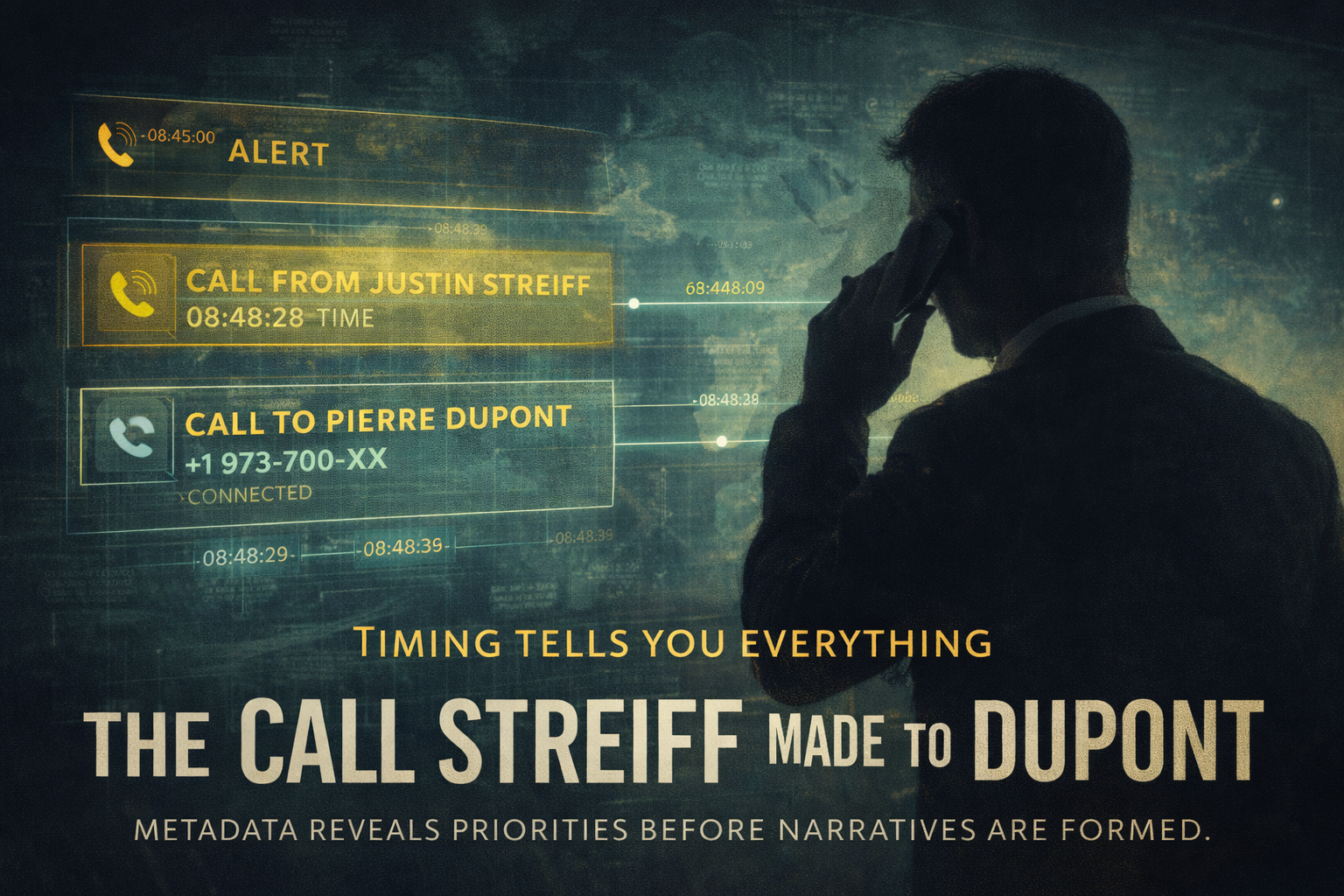
When I reviewed the communications metadata after the incident, one thing stood out starkly: the timing of a call from Justin Streiff to Pierre Dupont immediately after news broke. The first phone call was to billionaire Pierre Dupont. That kind of call isn’t about what was said — it’s about what the sequence of events implies about priorities and reactions, and this is precisely the realm where metadata cuts through all the noise.
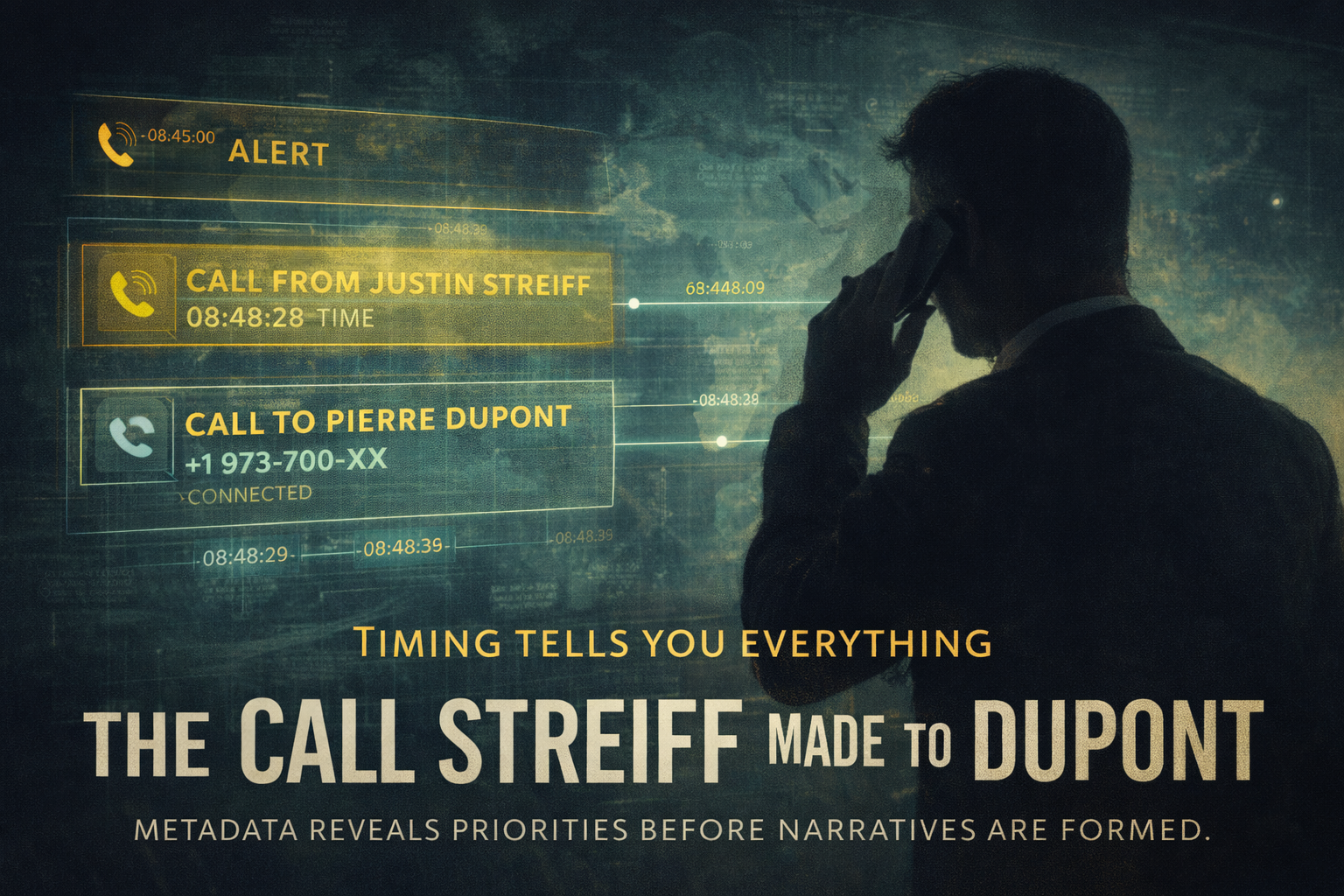
Open-source intelligence (OSINT) journalism itself has evolved to use metadata patterns like flight paths and call records to shape and verify narratives in conflicts and incidents around the world, from war zones to high-stakes political environments. International Center for Journalists. When you have a snap reaction to your boss being shot to call a billionaire, that is how you know where the pressure is coming from.


Subscribe to continue reading
Subscribe to get access to the rest of this post and other subscriber-only content.


